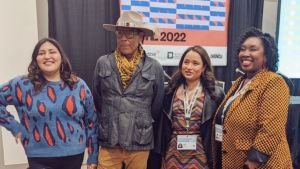
Embora tenham sido tomadas medidas para aumentar a representação e as narrativas abertas para os nativos americanos na mídia, o setor de entretenimento ainda tem um longo caminho a percorrer. Criadores de origens indígenas estão se destacando com histórias contadas e inspiradas em suas diversas perspectivas, com o objetivo de influenciar públicos de todas as origens.
Nielsen’s panel on the representation of Native peoples at SXSW, Forget Mascots. The Native Representation TV Needs, brought behind-the-scenes insight into how authentic Native representation occurs on screen and throughout the entertainment industry.
For better representation of Native Americans today, the first issue at hand is the lack of representative content and characters as a whole. Based on the 2020 U.S. Census, approximately 2% of the U.S. population is indigenous, yet Análise de inclusão do Gracenote data shows that the community is present in fewer than 0.5% of lead recurring roles on television.
O apagamento dos povos indígenas na tela ocorre devido à limitação de talentos indígenas no elenco e às representações estereotipadas altamente visíveis entre os mascotes esportivos. De acordo com uma pesquisa da Nielsen, 56% dos fãs de esportes do sexo masculino disseram que a única vez que veem povos indígenas representados na TV é quando os veem como mascotes em esportes, e 98% dos principais programas transmitidos são programas esportivos. Isso é uma apropriação dos povos nativos, e esses mascotes fazem caricaturas de suas culturas. Leah Salgado, diretora de impacto da IllumiNative e cidadã da tribo Pascua Yaqui, compartilhou dados de um projeto chamado "Reclaiming Native Truth", o maior estudo de pesquisa de opinião pública feito sobre o que os não-nativos pensam sobre os povos nativos, analisando por que as percepções e ideias são formadas.
"Temos uma pesquisa que diz que 65% dos povos nativos são contra o uso do Tomahawk chop [pelo Atlanta Braves]. Os jovens nativos ficam ainda mais ofendidos com o uso de mascotes nativos", disse Salgado. "Quando as pessoas só veem mascotes indígenas, elas tendem a ver os indígenas como mais agressivos, como resultado da visualização desses estereótipos."
Part of Illuminative’s mission is to find ways to shift the public narrative to more positive, contemporary, authentic stories of Native people, something Sierra Teller Ornelas, Showrunner, Executive Producer and co-creator of Rutherford Falls and a citizen of the Navajo Nation, advocates for in her work. “I feel like there are stereotypes that we are exhausted by, that non-Native people aren’t even aware of,” Teller Ornelas said. “So there’s a weird dance where you want to dispel these myths, but then you also have to explain that the myth exists. That’s why comedy is so effective.”
Bird Runningwater, a veteran of The Sundance Institute, producer with Amazon Studios, and citizen of Cheyenne and Mescalero Apache Tribes, talked about the challenge of getting into the industry. “I think that the educational experience of most Americans in the country, compounded with the invisibility across American popular culture, create a big problem,” Runningwater said. “You’re also dealing with decision makers and gatekeepers in the industry, who were educated by that same system and also work in that same system where we’re invisible.”
A representação autêntica, tanto na tela quanto no setor de mídia, ajuda a eliminar estereótipos negativos de várias pessoas sub-representadas e oferece novas histórias ao público. A pesquisa da Nielsen mostra que 87% dos espectadores estão interessados em ver pessoas fora de seus grupos de identidade.
"Um modelo seguro, hierárquico, de supremacia branca e dirigido por homens não vai criar o melhor conteúdo indígena", disse Runningwater. "É preciso estar disposto a recontemplar um método de produção diferente e variar o método de produção."
