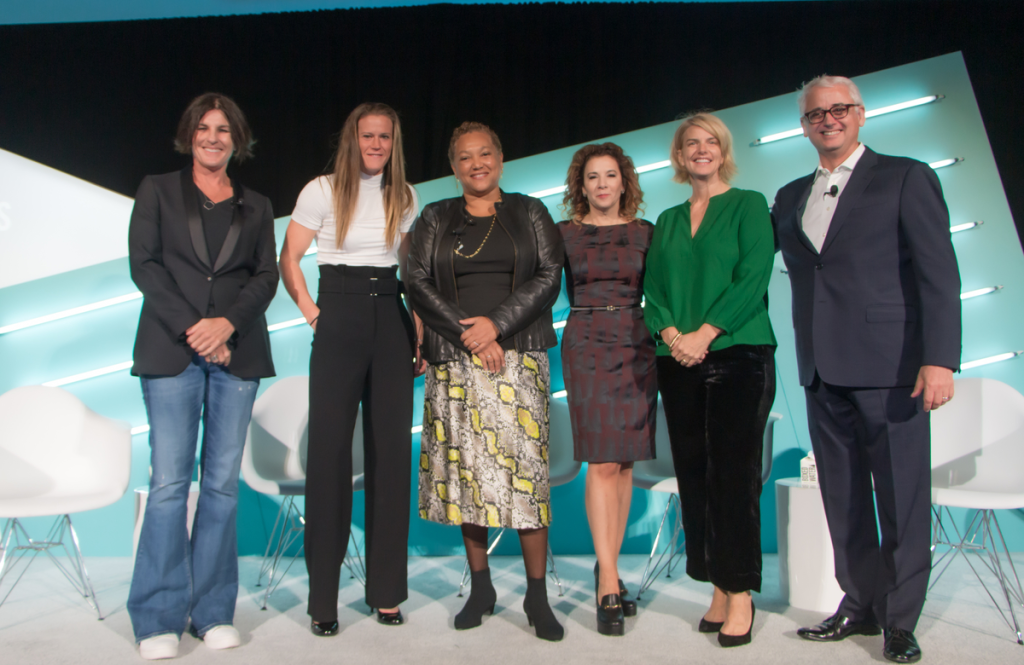
Last week, Nielsen executives took center-stage during Advertising Week—the annual conference where celebrities, innovators, marketers and media executives come together to discuss the future of advertising. Our leaders shared their perspectives throughout various sessions on the power of data and information, the future of TV, the importance of taking a stand for what’s right and Nielsen’s role in serving as the source of truth for the media industry.
No mundo atual, caracterizado pelo big data e pela sobrecarga de informações, as empresas precisam ter certeza de que possuem as informações mais completas e confiáveis. O que acontece se os dados estiverem incompletos e não forem confiáveis? Isso pode causar erros dispendiosos quando as empresas estão inovando, desenvolvendo produtos de última geração e criando novos mercados. É mais importante do que nunca ter uma visão inclusiva e representativa dos segmentos de consumidores.
“We can’t win in our mission of being one media truth, unless that truth represents everyone, everywhere,” said David Kenny, CEO and Chief Diversity Officer at Nielsen during his opening remarks for Nielsen’s session at Advertising Week, Beyond the Lens: The Bottom Line Impact of Media Representation. “We have to have a truly representative workforce, products that measure all consumers and we must have a stand in the marketplace that represents everyone.”
É fundamental que as empresas de mídia incluam pessoas de todas as esferas da vida em seus esforços para alcançar uma representação verdadeira. Além da diversidade racial e étnica, a representação na mídia também deve incluir casais do mesmo sexo, mulheres, crianças, idosos e pessoas com deficiência, tanto dentro quanto fora da tela, bem como nas medições da Nielsen.
In the beginning of the week, Megan Clarken, Chief Commercial Officer, Nielsen Global Media, kicked off the discussion on the importance of diversity and inclusion in media, especially when it comes to women, at an event hosted by the Geena Davis Institute on Gender in Media. The institute, which advocates for gender parity in the media industry, presented television insights from its GD-IQ machine learning tool for the first time and held a panel discussion that featured prominent children’s TV industry executives. Before the panelists shared their stories on how to best address representation and why it’s a crucial component to success, Clarken shared her perspective on why more women need to be on screen.
“A imagem em movimento é poderosa e traz consigo grandes vantagens em termos de entretenimento, programação educacional, informação e, se tratada corretamente, empoderamento”, disse Clarken. “Mas este último depende da paridade em relação à representação. Depende da existência de papéis fortes para atrizes fortes, jovens ou idosas.”
The following day at Advertising Week, Clarken moderated a star-studded panel on the impact that media representation has on consumers, brands and businesses. The panel of leading and influential women included Madeline Di Nonno, CEO, Geena Davis Institute on Gender in Media, Sarah Kate Ellis, CEO & President, GLAAD, Christina Norman, Media Advisor, and Alyssa Naeher, Goalkeeper, U.S. Women’s National Soccer Team & the Chicago Red Stars of the National Women’s Soccer League.
O painel começou com uma discussão sobre a representação de personagens femininas na tela em conteúdos infantis. Na última década, a porcentagem de personagens femininas na televisão infantil cresceu significativamente e, de acordo com o Instituto Geena Davis, as personagens femininas aparecem na tela 55,3% do tempo e falam 50% do tempo. Esse é um marco importante que não deve ser menosprezado.
“This is historic…For the first time in history, we have actually achieved parity when it comes to female characters in children’s television,” said Di Nonno.
The discussion then shifted to focus on the progress made over the years to not only portray LGBTQ families on screen, but also to ensure they are counted and represented in national TV ratings. Last year, Nielsen announced that it had worked with GLAAD to ensure same gender spouses/partners and homes were included as part of the ratings that Nielsen reports. Including same gender spouses and homes gives marketers and media companies a better view into the media habits of LGBTQ consumers and their preferences.
As an example, Kenny pointed to the Rachel Maddow Show on MSNBC during the panel introduction. While the show typically ranks within the top 10 cable network programs among all U.S. households each week, it regularly ranks No. 1 as a prime cable program among same gender households. “That’s really important because the pink dollar is really powerful and oftentimes is 2x or 3x its counterpart when it comes to spending power,” said Ellis. “When you are looking to buy spending power [media inventory], you may look at Rachel differently and put more money against an LGBTQ show than another show.”
Organizações como o Geena Davis Institute e a GLAAD estão usando o poder dos dados para ajudar a promover a responsabilidade e a representatividade na tela. Elas estão defendendo essa causa usando métricas e insights para apontar a composição do público, as tendências de visualização e o engajamento como fatores para aumentar a representatividade feminina e LGBTQ no conteúdo. No entanto, ainda há trabalho a ser feito para garantir que haja representatividade fora da tela e entre os executivos das empresas de mídia.
“When you [a network] introduce new programs that celebrate the audience, they can see themselves in it, and it’s reflective in ratings and in the audience that the network attracts now,” said Norman. “It really is about working on both sides—yes, bringing in creators, yes, bringing in the right kind of new content, making sure the stories are reflective of the world that we live in. But it’s also really about making sure that the executives making those decisions have that lived reality as well.”
Representation, inclusion and pay parity are not just challenges faced by the media industry or in business; they’re also a sad and harsh reality that female athletes encounter each and every day. The issue of pay inequality between men and women was a hot topic earlier this year, and it reached a boiling point when the U.S. Women’s National Soccer team won it’s fourth FIFA World Cup in 28 years and shined a light to the huge pay disparity compared to the U.S. Men’s National Soccer team. The issue has now transcended the locker rooms, and brands and businesses have become increasingly vocal regarding the need to achieve equal pay across all segments of society.
“Muito progresso foi feito ao longo dos anos, se voltarmos ao ponto em que as mulheres começaram a praticar esportes. Acho que ainda há uma grande lacuna que precisa continuar a ser preenchida. Essas são as discussões que precisam acontecer, e conscientizar as pessoas sobre isso é o primeiro passo do processo. Acho que a conscientização foi aumentada e as pessoas estão falando sobre isso. O segundo passo é o que pode ser feito a respeito, quais medidas podem ser tomadas em todos os esportes”, disse Naeher. “A tocha foi passada. Agora é nossa responsabilidade como equipe, como jogadoras e como indivíduos continuar a ter essas conversas.”
Da mesma forma, como porta-vozes da verdade para a indústria da mídia, é nosso trabalho trazer à tona as conversas difíceis, ajudar a moldar a narrativa e fornecer os dados que permitem a medição e a representação de todos os segmentos de consumidores. A Nielsen não leva essa responsabilidade de ânimo leve e continuamos a nos envolver com nossos clientes, parceiros da indústria, organizações civis e governo para garantir que a confiança e a transparência na mídia sejam os faróis que guiam esta indústria para frente.
“Nosso objetivo é criar uma verdade única para que você compreenda a mídia, e essa verdade precisa ser a verdade de todos”, afirmou Kenny.
