Hoje em dia, os profissionais de marketing têm acesso a várias ferramentas sofisticadas para segmentar públicos com base em comportamentos e interesses intrincados, visando a um foco mais nítido nos públicos. No entanto, mesmo com essa busca por segmentação granular, a idade continua sendo uma lente fundamental e poderosa para entender o consumo de mídia. A raridade de um vídeo, meme ou tendência que genuinamente cativa a todos, desde os adolescentes até as gerações mais velhas, diz muito sobre o poder duradouro da idade na formação de nossas experiências compartilhadas e preferências de plataforma - uma realidade que torna o marketing geracional uma estratégia indispensável.
Os profissionais de marketing que adotam uma visão holística além da dominância percebida de públicos mais jovens e digitalmente nativos durante a segmentação podem obter um alcance e um envolvimento significativos com públicos cujos hábitos de mídia distintos e capacidade de gasto considerável são geralmente definidos por sua idade. Portanto, capturar efetivamente o interesse e gerar conversões em vários pontos de contato, bem como conectar-se verdadeiramente com seus públicos, exige estratégias personalizadas com planejamento de mídia inteligente em relação à idade.
O público digital único é um mito
The term ‘digital native’ often conjures an image of a young person constantly connected via a smartphone, but this isn’t the full picture. Older demographics are also significantly and increasingly engaged online. While younger generations are undeniably heavy digital users, dismissing older demographics as digitally inept is an inaccurate generalization. Platforms like WhatsApp show near-ubiquitous daily usage across all adult age groups in Germany. 71% of Germans aged 55-69 use WhatsApp daily, demonstrating a strong engagement with the online communication tool within this demographic.
These trends suggest that the idea of a singular, young ‘digital audience’ is an oversimplification; digital engagement is prevalent and growing across all adult age groups, even if device preferences differ. For example, the declining weekly PC/laptop usage among 18- to 34-year-olds in Germany doesn’t signal a move away from the digital world, but rather a shift in how this key demographic engages—a pattern that contrasts with, yet exists alongside, the increasing digital adoption of other age groups on different platforms.1
A idade continua sendo um fator importante na forma como nos sintonizamos
Even as digital technologies become more accessible and familiar to people of all ages, fundamental differences persist in the methods and platforms generations favor for media consumption. The way we choose to ‘tune in’ is still heavily influenced by our age group. For instance, in the U.S., viewers aged 2-34 spend over 60% of their TV time on streaming services whereas for viewers aged 65-99, a significant 74.7% of their television consumption remains rooted in traditional linear TV.2
Divergence in media engagement based on age is not confined to how we watch video content; it is evident in other forms of media as well. For example, when we look at how different age groups in Germany use social media, we see clear differences in their platform choices and usage intensity. Younger adults, aged 18 to 34, exhibit a strong daily affinity for visually-oriented platforms like Instagram, with 59% engaging daily, and short-form video platforms like TikTok, with 38% daily usage. Among older adults aged 55-69, daily Facebook usage is at 36%. YouTube’s daily usage also varies, with 48% of the youngest adults using it compared to 18% of the oldest. When it comes to audio, 74% of Germans aged 18 to 34 show a strong preference for music streaming services, while older generations aged 55 to 69 still find comfort and connection in traditional radio broadcasts, with 64% weekly usage in this age group.3
O público mais velho continua a evoluir
A ideia de que os públicos mais velhos estão atrasados na adoção de novos hábitos de mídia também está ultrapassada. Na verdade, os grupos demográficos mais velhos estão evoluindo em um ritmo que rivaliza e, em algumas áreas, supera as gerações mais jovens. Embora os consumidores mais jovens tenham estado na vanguarda da adoção digital, os grupos mais velhos estão se recuperando rapidamente, impulsionados por fatores como o desejo de flexibilidade, conteúdo sob demanda e experiências de mídia premium.
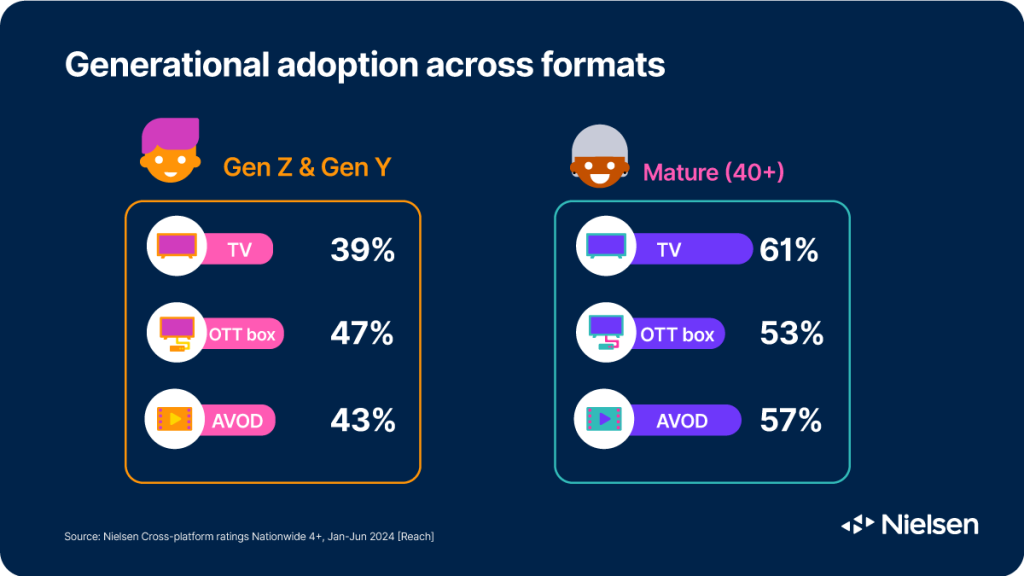
In Thailand, mature audiences aged 55 and above are just as likely as Gen Z and Gen Y to watch TV in their free time—62% versus 47%—but they tend to favor different formats. They show a much higher inclination towards traditional TV at 61% compared to Gen Z and Gen Y at 39%, and also favor AVOD at 57% versus 43% for the younger generations. Older adults also show a slightly higher preference for OTT boxes at 53% compared to 47% for Gen Z and Gen Y.4 In Germany, weekly use of video streaming among adults aged 55–69 rose from 49% in 2023 to 57% in 2024, within just one year.5 The evolution in viewing habits reflects broader shifts in how older audiences engage with premium content, a space once dominated by younger consumers. These trends underscores the growing importance for marketers to recognize that older demographics aren’t static—they’re quickly adapting and redefining their media behaviors.
A idade não é a única lente
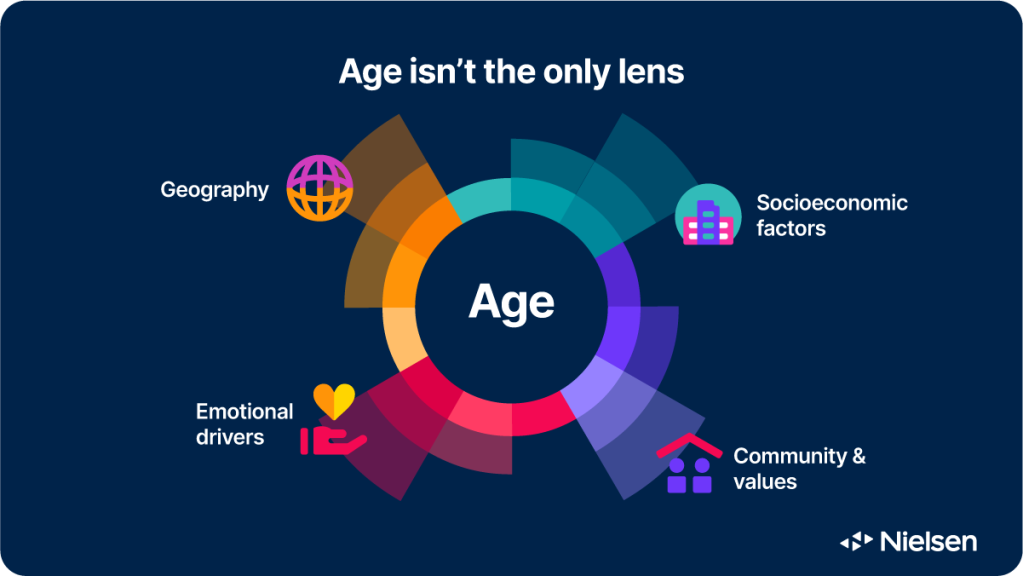
Demographic data like age provides a starting point, but it’s not the only factor to consider when seeking a deeper understanding of today’s audience and effective targeting. Marketers need to explore the richer dimensions of identity and connection that offer a more nuanced view of media behavior. Hence, it’s important to also think about these factors:
- Geography: Where individuals live significantly impacts their media access, preferences for local content, and exposure to regional trends. Marketers should consider geographic relevance in their messaging and channel selection to connect effectively with audiences in specific locations.
- Socioeconomic factors: An individual’s education level and income significantly influence their purchasing power, access to different types of media (e.g., premium subscriptions, devices), and overall lifestyle, which in turn affects their media consumption habits and responsiveness to marketing.
- Community and shared values: People often form strong connections with others who share their hobbies, beliefs, or principles, leading to communities that include individuals of all ages. When marketing aligns with these shared interests and values, it can foster deep engagement and strong loyalty within these communities, regardless of age demographics.
- Emotional drivers: Beyond demographics, fundamental human emotions like belonging and aspiration along with psychological needs for information, entertainment, or connection, powerfully influence the media we choose and how we react to marketing. Content that effectively taps into this resonates with people across all age groups, creating lasting impact on their media choices.
The media landscape today demands a nuanced understanding of audience behavior, and age remains a fundamental factor in shaping those behaviors. Discounting age in favor of a singular focus on younger, digitally native audiences is shortsighted and also risks alienating significant consumer segments with substantial purchasing power and distinct media preferences. Embracing an age-inclusive marketing strategy—one that strategically leverages both traditional and digital channels to reach diverse demographics with tailored messaging is essential for marketers to drive more meaningful connections with their audiences. To gain the comprehensive insights and actionable strategies needed to implement such an age-inclusive approach in your media plans, download our Guia de planejamento global 2025.
Notas
1 Source: Nielsen Survey: Media usage in Germany, Spring 2024
2 Source: Nielsen National TV Ratings, Persons 2+, October 2024
3 Source: Nielsen Survey: Media usage in Germany, Spring 2024
4 Source: Nielsen Cross-platform ratings Nationwide 4+, Jan-Jun 2024 [Reach]5 Source: Nielsen Survey: Media usage in Germany, Spring 2024