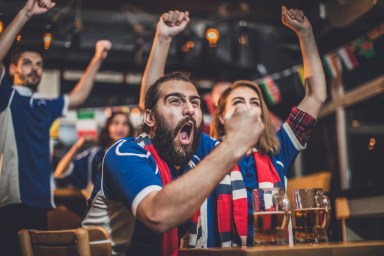
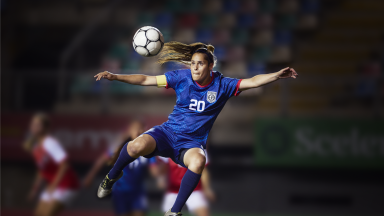
In 2026, for the first time ever, the World Cup will be spread over three countries. Sixteen cities across the U.S., Canada and Mexico will host matches, giving brands and advertisers a chance to expand their reach and build connections with growing football fan bases across North America—if they know where to look.
The tide of popularity is turning for football in North America, to the benefit of sponsors and advertisers. Since 2015, the U.S. has added 10 clubs to the MLS, while Canada founded the Canadian Premier League in 2017 with eight current teams and Mexico’s Liga MX boasts some of the largest crowds of any North American league1.
This new popularity is creating hotspots of football fan bases across future host countries. In Canada, for instance, interest in football in general has increased 32.8% since the announcement that the country will host 10 2026 World Cup matches2. And according to Nielsen Scarborough, in the U.S. Houston is the 2026 World Cup host city with the most football fans per capita, followed by Los Angeles and Miami/Ft. Lauderdale.
As cidades-sede da Copa do Mundo abrigam seus próprios clubes de futebol, portanto, a concentração de torcedores nessas áreas faz sentido. Mas, o mais importante é que a popularidade dos times locais pode se espalhar para as áreas vizinhas, ampliando a esfera de influência dos anunciantes que fazem parcerias com times ou atletas regionais.
To reach these fans, advertisers are using social media sites like Twitter, TikTok and Twitch. According to Nielsen’s 2022 World Football Report, while free-to-air television is still the preferred method of viewing matches (81%) for football fans who watch sports, social media is now a go-to platform, with 72% of fans claiming they use apps to watch the action.
And when their teams do well, fans flock to social media to follow and like and engage with content. The Canadian men’s team, for example, saw a significant increase in social media content & interactions in the 2021/2022 season after qualifying for their first World Cup in 36 years. The women’s national team saw a similar increase in social media engagement when they won gold in the 2021 Tokyo Olympics.
The qualification also sparked interest in football for Canadians in general, with 35.6% saying they are now more interested in watching football than before the team qualified for the World Cup, according to Nielsen Fan Insights.
National team football fans in each host country prefer YouTube for sports news and content. While Twitch is among the lowest used by percentage, fans over index significantly on its use compared to the general population. To further expand its reach for the 2022 World Cup, Twitch is adding a live streaming component to their coverage for the first time, granting Brazilian Twitch influencer Casimiro Miguel the rights to stream matches to his millions of followers.
In addition to the notable on-screen audience exposure that sponsors receive on both live TV and social media, Nielsen’s 2021 Trust in Advertising study found that brand sponsorships in sporting events rank just behind recommendations from friends and family, as 81% of consumers reported either completely or somewhat trusting them (vs. 89% who trust recommendations). Football fans are also eager to learn more about the brands sponsoring their favorite team—56% of percent actively inform themselves about brands engaged as a sports sponsor.
But football sponsorships are more than an opportunity to increase brand awareness—they can be the key to staying top of mind with fans when it comes time to make a purchase. According to Nielsen Fan Insights, 67% of football fans think brands are more appealing when they participate in sports sponsorships, and 59% would pick a sponsor’s product over a competitor’s if price and quality are the same, compared to 45% of the general population. And Nielsen’s 2022 Global Sports Report found that the sponsorships drove an average 10% lift in purchase intent among the exposed fanbase.
À medida que a Copa do Mundo de 2022 se encaminha para a primeira partida, os vencedores e perdedores serão decididos dentro e fora do campo, com os anunciantes avaliando o custo do patrocínio em relação ao impacto no reconhecimento da marca e na receita. As marcas que quiserem sair na frente para a Copa do Mundo de 2026 e começar a fazer incursões iniciais na América do Norte precisam começar a planejar agora campanhas que possam aproveitar o impulso de 2022 e transformar os torcedores de hoje nos clientes de amanhã.
Notas
- A Confederação de Futebol da América do Norte, Central e Caribe
- Nielsen Fan Insights, agosto de 2022