With so much discussion in the media industry about equity for the Black community, it’s no wonder that historically Black colleges and universities (HBCUs) have taken center stage. These schools continue to meet the demand for safe space by placing African American culture at the center of their collegiate experiences—and their influence extends beyond their alumni bases. Today, brands and content creators committed to making an impact with their messaging to Black consumers are also demonstrating their commitment by collaborating with—and elevating—the HBCU community.
In the last year alone, high profile brand partnerships have expanded with professional sports, fashion and beauty campaigns to celebrate the influence of HBCUs. For example, Olay’s “Decode the Bias & Face Anything” campaign garnered over 7.4 million digital impressions in September on social media, Black-owned and Black-targeted digital outlets, according to Nielsen Ad Intel Digital. Additionally, the campaign went a step further to partner the brand with historic publisher Ebony’s HBCU Campus Queens initiative to celebrate women in science, technology, engineering and mathematics (STEM).
And after a three-year void, content creators are starting to catch up. According to data from Gracenote Studio System, four HBCU-themed programs are in development for next season, and three have already been ordered to series.
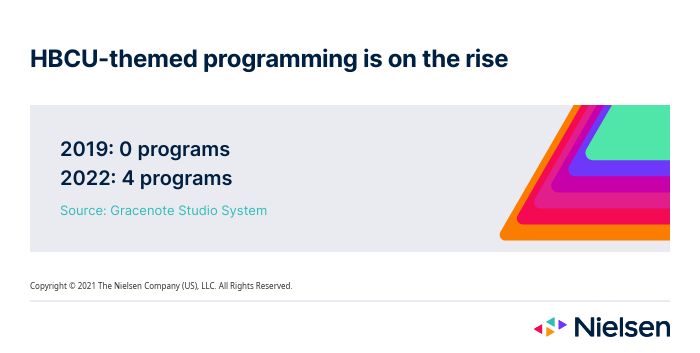
The programs fill the gap in scripted content exploring the HBCU experience since programs like BET’s “The Quad” and Netflix’s “Marching Orders” ended in 2018. Even with new programs on the way, fans are still flocking to the original HBCU program, “A Different World,” with 540 million minutes viewed last month across Bounce TV, Amazon Prime and TV One.
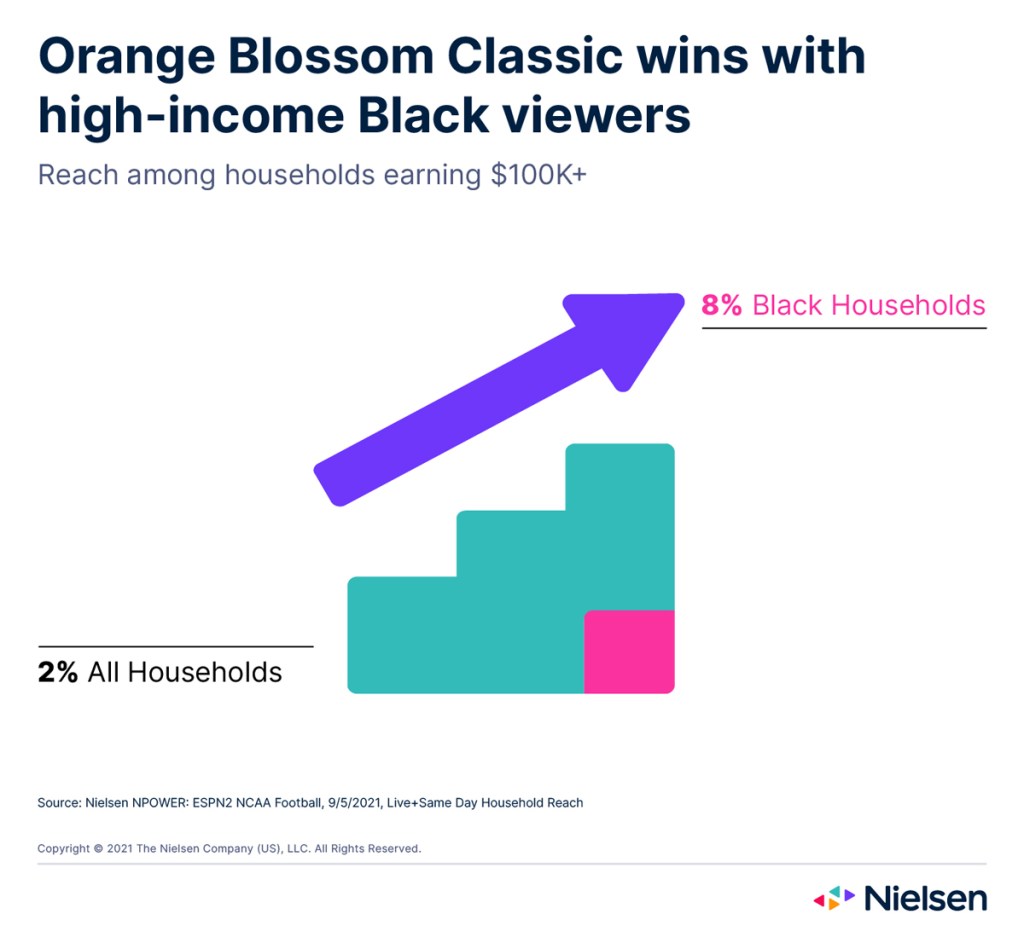
Scripted programming aside, sports content is the primary way that the HBCU fanbase sees programming that showcases their distinct culture today. The increase in HBCU football games airing on national networks included the return of the Orange Blossom Classic between Jackson State and Florida A&M University, which boasted 4x the reach among Black households earning $100,000 or more compared with high-income households overall.
ESPN continues to tap into the competitive spirit of the underserved HBCU fanbase with its popular show First Take when it heads to FAMU for a star-studded Homecoming Weekend in the program’s first on-site show since January 2020.
Reprezentatywne treści w połączeniu z integracyjnymi reklamami to lukratywne i wpływowe połączenie dla 67% czarnoskórych widzów, którzy według badań Nielsena* chętniej oglądają treści z udziałem kogoś z ich grupy tożsamości. Dobrą wiadomością dla marek jest to, że czarnoskórzy widzowie są również dwukrotnie bardziej skłonni do kupowania od marek, które reklamują się w treściach, w których reprezentacja jest właściwa. Celowa współpraca z określonymi segmentami społeczności czarnoskórych, takimi jak absolwenci HBCU, okazuje się być zwycięską grą dla marek i twórców treści.
For more insights about the African American community, download our latest Diverse Intelligence Series report, Seeing and Believing: Meeting Black audience demand for representation that matters.
Metodologia
Informacje zawarte w tym artykule pochodzą z następujących źródeł:
- *Nielsen Attitudes on Representation Study, May 2021
- Nielsen Ad Intel – Digital, September 2021
- Gracenote Studio System, 2019-2022 TV Seasons
- Nielsen National TV Ratings: A Different World, P2+ Gross Minutes Viewed, September 2021; ESPN2 NCAA Football, 9/5/2021, Live+Same Day Household Reach