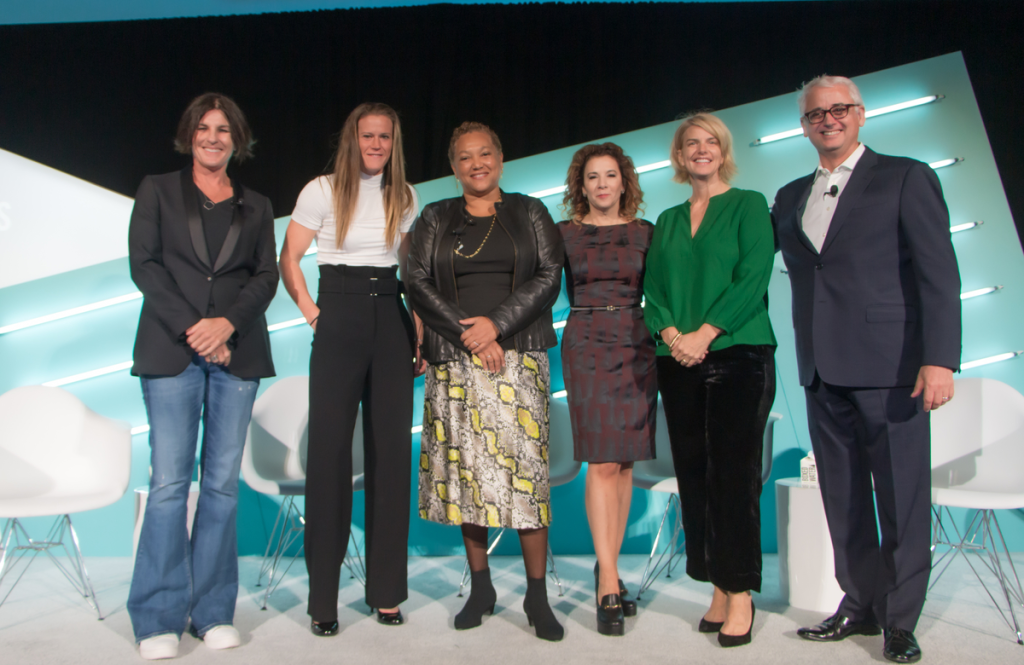
Last week, Nielsen executives took center-stage during Advertising Week—the annual conference where celebrities, innovators, marketers and media executives come together to discuss the future of advertising. Our leaders shared their perspectives throughout various sessions on the power of data and information, the future of TV, the importance of taking a stand for what’s right and Nielsen’s role in serving as the source of truth for the media industry.
W dzisiejszym świecie dużych zbiorów danych i nadmiaru informacji, firmy muszą mieć pewność, że posiadają najbardziej kompletne i wiarygodne informacje. Co się stanie, jeśli dane będą niekompletne i niewiarygodne? Może to powodować kosztowne błędy, gdy firmy wprowadzają innowacje, budują produkty nowej generacji i tworzą nowe rynki. Ważniejsze niż kiedykolwiek jest posiadanie całościowego i reprezentatywnego obrazu segmentów konsumenckich.
“We can’t win in our mission of being one media truth, unless that truth represents everyone, everywhere,” said David Kenny, CEO and Chief Diversity Officer at Nielsen during his opening remarks for Nielsen’s session at Advertising Week, Beyond the Lens: The Bottom Line Impact of Media Representation. “We have to have a truly representative workforce, products that measure all consumers and we must have a stand in the marketplace that represents everyone.”
Konieczne jest, aby firmy medialne uwzględniały ludzi z różnych środowisk w swoich wysiłkach na rzecz prawdziwej reprezentacji. Oprócz różnorodności rasowej i etnicznej, reprezentacja w mediach musi również obejmować pary tej samej płci, kobiety, dzieci, osoby starsze i osoby niepełnosprawne zarówno na ekranie, jak i poza nim, a także w pomiarach Nielsena.
In the beginning of the week, Megan Clarken, Chief Commercial Officer, Nielsen Global Media, kicked off the discussion on the importance of diversity and inclusion in media, especially when it comes to women, at an event hosted by the Geena Davis Institute on Gender in Media. The institute, which advocates for gender parity in the media industry, presented television insights from its GD-IQ machine learning tool for the first time and held a panel discussion that featured prominent children’s TV industry executives. Before the panelists shared their stories on how to best address representation and why it’s a crucial component to success, Clarken shared her perspective on why more women need to be on screen.
"Ruchomy obraz jest potężny, a wraz z nim pojawia się wielka zaleta rozrywki, programów edukacyjnych, informacji i, jeśli jest właściwie traktowany, wzmocnienia" - powiedział Clarken. "Ale to ostatnie opiera się na parytecie w odniesieniu do reprezentacji. Opiera się na posiadaniu silnych ról dla silnych aktorek, młodych lub starszych".
The following day at Advertising Week, Clarken moderated a star-studded panel on the impact that media representation has on consumers, brands and businesses. The panel of leading and influential women included Madeline Di Nonno, CEO, Geena Davis Institute on Gender in Media, Sarah Kate Ellis, CEO & President, GLAAD, Christina Norman, Media Advisor, and Alyssa Naeher, Goalkeeper, U.S. Women’s National Soccer Team & the Chicago Red Stars of the National Women’s Soccer League.
Panel rozpoczął się od dyskusji na temat ekranowej reprezentacji postaci kobiecych w treściach dla dzieci. W ciągu ostatniej dekady odsetek postaci kobiecych w telewizji dziecięcej znacznie wzrósł, a według Geena Davis Institute postacie kobiece są na ekranie przez 55,3% czasu i mówią 50%. Jest to kamień milowy, którego nie należy lekceważyć.
“This is historic…For the first time in history, we have actually achieved parity when it comes to female characters in children’s television,” said Di Nonno.
The discussion then shifted to focus on the progress made over the years to not only portray LGBTQ families on screen, but also to ensure they are counted and represented in national TV ratings. Last year, Nielsen announced that it had worked with GLAAD to ensure same gender spouses/partners and homes were included as part of the ratings that Nielsen reports. Including same gender spouses and homes gives marketers and media companies a better view into the media habits of LGBTQ consumers and their preferences.
As an example, Kenny pointed to the Rachel Maddow Show on MSNBC during the panel introduction. While the show typically ranks within the top 10 cable network programs among all U.S. households each week, it regularly ranks No. 1 as a prime cable program among same gender households. “That’s really important because the pink dollar is really powerful and oftentimes is 2x or 3x its counterpart when it comes to spending power,” said Ellis. “When you are looking to buy spending power [media inventory], you may look at Rachel differently and put more money against an LGBTQ show than another show.”
Organizacje takie jak Geena Davis Institute i GLAAD wykorzystują moc danych, aby pomóc w zwiększeniu odpowiedzialności i reprezentacji na ekranie. Argumentują to, wykorzystując wskaźniki i spostrzeżenia, aby wskazać skład widowni, trendy oglądalności i zaangażowanie jako siłę napędową do zwiększenia reprezentacji kobiet i osób LGBTQ w treściach. Istnieje jednak również praca, którą należy wykonać, aby zapewnić reprezentację poza ekranem i wśród kadry kierowniczej firm medialnych.
“When you [a network] introduce new programs that celebrate the audience, they can see themselves in it, and it’s reflective in ratings and in the audience that the network attracts now,” said Norman. “It really is about working on both sides—yes, bringing in creators, yes, bringing in the right kind of new content, making sure the stories are reflective of the world that we live in. But it’s also really about making sure that the executives making those decisions have that lived reality as well.”
Representation, inclusion and pay parity are not just challenges faced by the media industry or in business; they’re also a sad and harsh reality that female athletes encounter each and every day. The issue of pay inequality between men and women was a hot topic earlier this year, and it reached a boiling point when the U.S. Women’s National Soccer team won it’s fourth FIFA World Cup in 28 years and shined a light to the huge pay disparity compared to the U.S. Men’s National Soccer team. The issue has now transcended the locker rooms, and brands and businesses have become increasingly vocal regarding the need to achieve equal pay across all segments of society.
"Na przestrzeni lat poczyniono wiele postępów, jeśli cofniemy się do początków kobiet w sporcie. Myślę, że nadal istnieje bardzo duża luka, którą należy wypełnić. To są dyskusje, które muszą się odbyć, a podniesienie świadomości na ten temat jest pierwszym krokiem w tym procesie. Myślę, że świadomość została podniesiona i ludzie o tym rozmawiają. Drugim krokiem jest to, co można z tym zrobić, jakie kroki można podjąć we wszystkich dyscyplinach sportowych" - powiedział Naeher. "Pochodnia została przekazana. Teraz naszym obowiązkiem jako zespołu, zawodników i jednostek jest kontynuowanie rozmów".
Podobnie, jako standardowy nośnik prawdy dla branży medialnej, naszym zadaniem jest ujawnienie trudnych rozmów, pomoc w kształtowaniu narracji i dostarczanie danych, które umożliwiają pomiar i reprezentację wszystkich segmentów konsumentów. Nielsen nie lekceważy tej odpowiedzialności i nadal współpracuje z naszymi klientami, partnerami branżowymi, organizacjami obywatelskimi i rządem, aby zapewnić, że zaufanie i przejrzystość w mediach są drogowskazami, które prowadzą tę branżę do przodu.
"Chcemy stworzyć jedną prawdę, abyście mogli zrozumieć media, a ta prawda musi być prawdą dla wszystkich" - powiedział Kenny.
