Nadszedł 66. sezon Konkursu Piosenki Eurowizji i jeśli poprzednie lata są jakąkolwiek wskazówką, rok 2022 będzie kolejnym hitem, jeśli chodzi o oglądalność. Ale jednocześnie międzynarodowy konkurs muzyczny zapewnia również wgląd w emocje publiczności - poprzez nastrój piosenek, na które głosują.
In addition to boasting seasons that have attracted more than 180 million viewers each year for the last seven years1, Eurovision’s international audience of music enthusiasts eagerly look forward to rooting for their favorite artists—and discovering new music.
And with the variety of music being presented at this year’s contest, audiences will be able to find a song to suit virtually every mood—because the performers showcase more moods with each new year of competition. According to Gracenote Global Music Data Sonic Descriptors sonic mood analysis of previous Eurovision contests, recent Eurovision winners have displayed far more emotional range than their predecessors. The 40 songs presented at this year’s contest represent 15 different primary moods. And the last 15 winners have represented 12 primary moods, while only 11 moods were represented among the winners of the entire first 40 years of the competition.
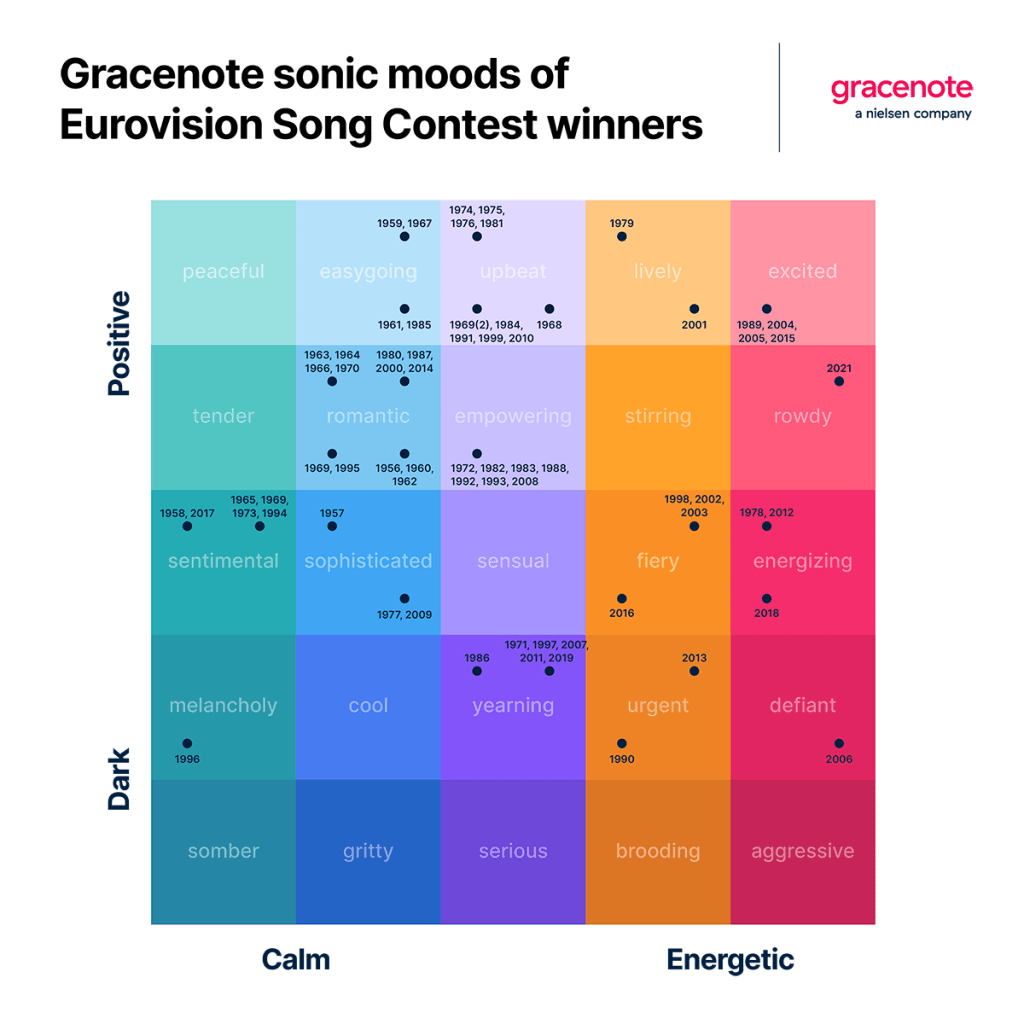
The recent uptick in emotional diversity isn’t surprising—consumers are increasingly looking for experiences that engage with them as individuals, and creators are rushing to fill the gap. American television, for instance, now features 817,000 unique program titles across traditional TV and streaming services, compared with just over 646,000 titles in 20192. For musicians and streaming services looking to reach and engage new audiences, Eurovision trends can be a finger on the pulse of global audiences and their moods.
Według tegorocznych wyborów publiczność szuka wykonawców, którzy dodadzą jej energii i uspokoją. Dwudziestu finalistów - połowa stawki - charakteryzuje się bardziej energicznym nastrojem, mimo że kategoria ta jest rzadziej wybierana przez zwycięzców. Dodatkowe siedem zgłoszeń charakteryzuje się spokojniejszym nastrojem, w tym zgłoszenia z Włoch i Holandii - dwóch faworytów do zwycięstwa w tegorocznym konkursie. Odbiega to od trendu z poprzednich konkursów, ale odzwierciedla niedawną zmianę nastrojów konsumentów.
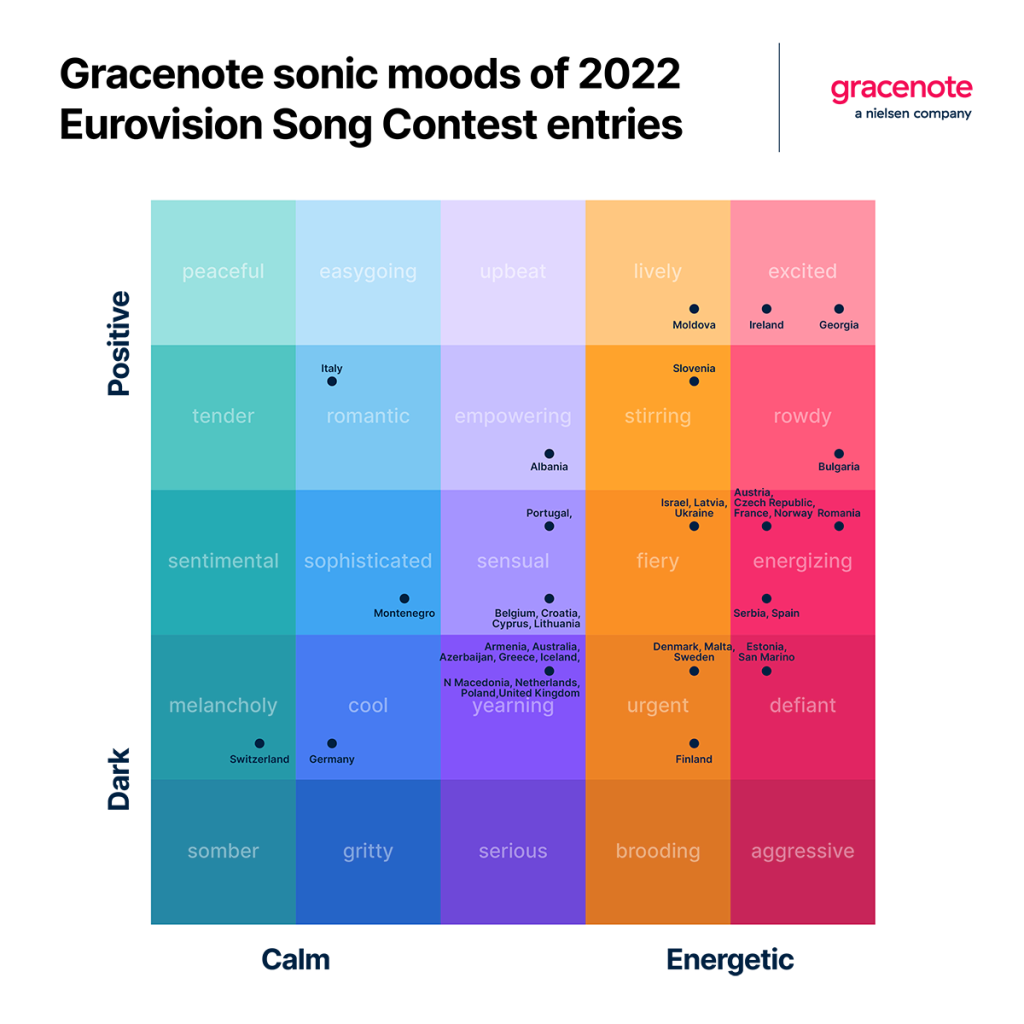
Faced with mounting supply chain woes, increasing inflation and the war in Ukraine, consumer confidence is at its lowest since the pandemic3. It’s no wonder audiences are looking for music that uplifts and reassures them. And Eurovision artists are meeting the moment.
Contrast this year’s trends with last year’s winner: “Zitti e Buoni,” a song classified as rowdy—the first time such a mood has won the competition. At the time of last year’s contest, many countries were lifting their COVID-related restrictions, and consumer confidence in Europe was its highest since October 20183. Americans echoed this sentiment, as a Nielsen custom consumer sentiment study found that in June of 2021, 90% of consumers said they were “ready to go” and get back to normal. Before the omicron spike later in the year, audiences were enthusiastic about emerging from over a year behind doors—and the choice of winner reflects their eagerness.
The benefits of striking the right chord with audiences don’t stop when the contest ends. And much like we see in other high-stakes competitions, Eurovision artists often see success far outside the competition. Out of 68 winning Eurovision songs, 46 have ascended to Billboard’s Top 100 U.K. Singles Chart4. And the 1976 winner, Brotherhood of Man’s “Save Your Kisses For Me,” spent 16 weeks on the chart, six of which were in the No. 1 spot.
Artyści nie są jedynymi, którzy mogą skorzystać na zrozumieniu i przewidywaniu nastrojów odbiorców. Usługi strumieniowego przesyłania muzyki mogą wykorzystywać dane o nastrojach dźwiękowych do tworzenia bogatszych list odtwarzania i stacji z szerszą gamą artystów, co pozwala słuchaczom zapoznać się z różnymi stylami muzycznymi i artystami, których mogliby nie odkryć samodzielnie.
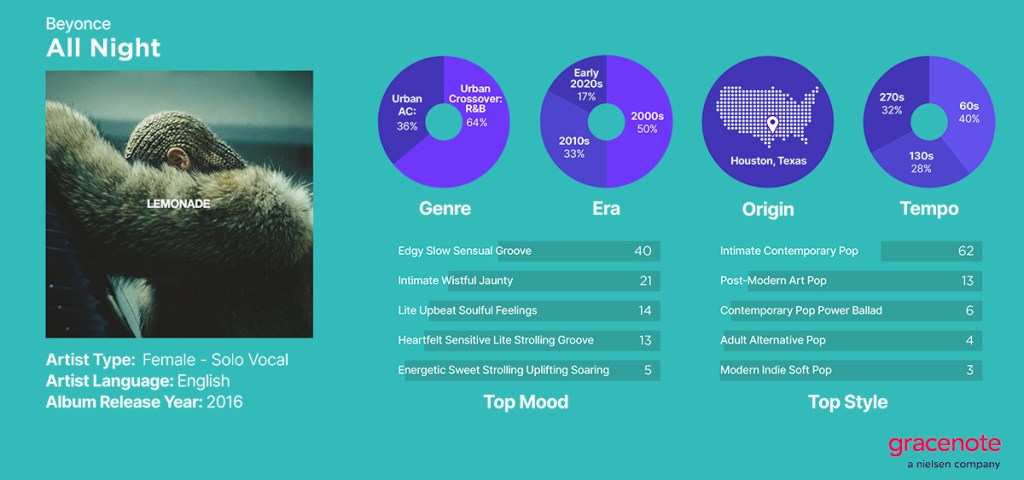
Ułatwienie odbiorcom znalezienia nowych utworów i zespołów, które pokochają, jest kluczowe. Zastosowanie bardzo szczegółowych metaopisów, takich jak nastrój, do treści audio pomaga narysować powiązania między gatunkiem, nastrojem, epoką i tempem, aby stworzyć pełniejszy profil słuchacza. Dane te umożliwiają zniuansowane ścieżki odkrywania i oferują rekomendacje audio, które są zgodne z aktualnym gustem słuchacza, zapewniając mu jednocześnie starannie wyselekcjonowane nowe opcje.
Uwagi
- Europejska Unia Nadawców
- Globalne dane wideo Gracenote, luty 2022 r.
- Organizacja Współpracy Gospodarczej i Rozwoju (OECD)
- Billboard