Nielsen’s Black History Month 2022 was filled with collaboration, intersectionality and wellness. SABLE (Sustaining Active Black Leadership and Empowerment), Nielsen’s Black employee Business Resource Group (BRG), chose the theme of Black Health and Wellness for 2022.
"팬데믹으로 인해 우리는 정신 건강, 우리 자신과 전반적인 웰빙을 돌보는 데 집중했습니다."라고 고객 솔루션 담당 임원 겸 SABLE 지역 리더인 Janay A. Battle은 말합니다. "하지만 우리는 일 년 내내 이 주제를 이어갈 계획입니다."
With lean-in circles, panels, documentary viewings and guest Q&As, Nielsen employees had the opportunity to explore their wellness and participate in programs about Black health, community and history.
“We wanted to do two things: create a safe space for Black employees and educate our colleagues about our community and experiences,” Tameisha Brown said, Program Manager and SABLE regional leader. “Having a place to just talk and chat and unwind for a bit—it’s nice to have that opportunity to meet other people and exchange stories and health tips.”
닐슨 내 흑인 커뮤니티를 넘어선 대화를 유도하기 위해 SABLE은 다른 닐슨 BRG와 협력하여 교차적 이슈에 대한 인식을 높였습니다. SABLE과 닐슨의 여성들은 '헤어 러브'라는 린인 서클을 주최했습니다. 2021년, 닐슨은 직장 내 인종에 따른 헤어스타일 차별을 근절하자는 '크라운 법(CROWN Act)'을 지지하는 서명을 했습니다.
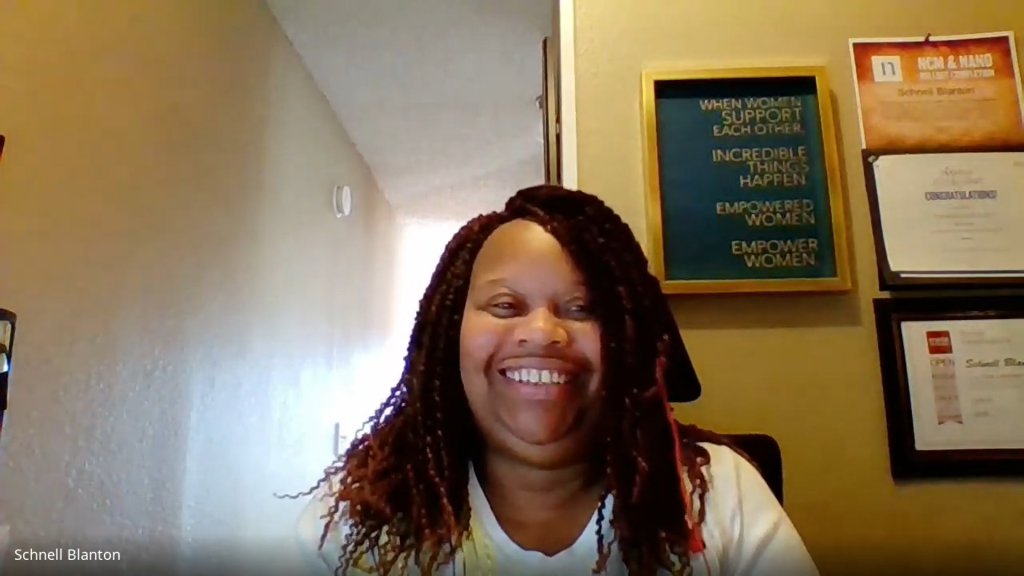
“Hair is a very relatable topic for women and people of color,” said Schnell Blanton, Regional Trainer and WIN regional leader. “Whether it’s because someone is touching their hair, it’s not thick enough, it’s not long enough, it’s not the right color, we don’t like the way our hair looks; what woman does not have some type of hair insecurity? I felt so connected on so many levels to that lean-In circle discussion.”
SABLE also worked with the PRIDE BRG representing LGBTQ+ employees, to host Audrey Nicole, an author who shared her experience as a Black trans woman growing up in the south. Nicole spoke about navigating her familial and professional relationships from before and after her transition. “That was really eye-opening because they talked about the effects of someone being Black, gay and also transgender,” Battle said. “I learned so much about what it’s like when they can’t be their true self because of the stereotype and stigma they would endure.”
One of the major events of this year’s BHM was the screening of a documentary called Who We Are: A Chronicle of Racism in America. The documentary serves as a timeline of anti-Black racism in the United States. For Tameisha Brown, the screening was particularly impactful.
“It’s hard to watch those things sometimes because it can be triggering and just a bit heavy to get through. But sometimes it’s easier for us to fall into what’s comfortable,” Brown said. “It was a reminder that, at the end of the day, we still have a ways to go in fighting racism. We have to keep pushing forward in order to make real progress.”