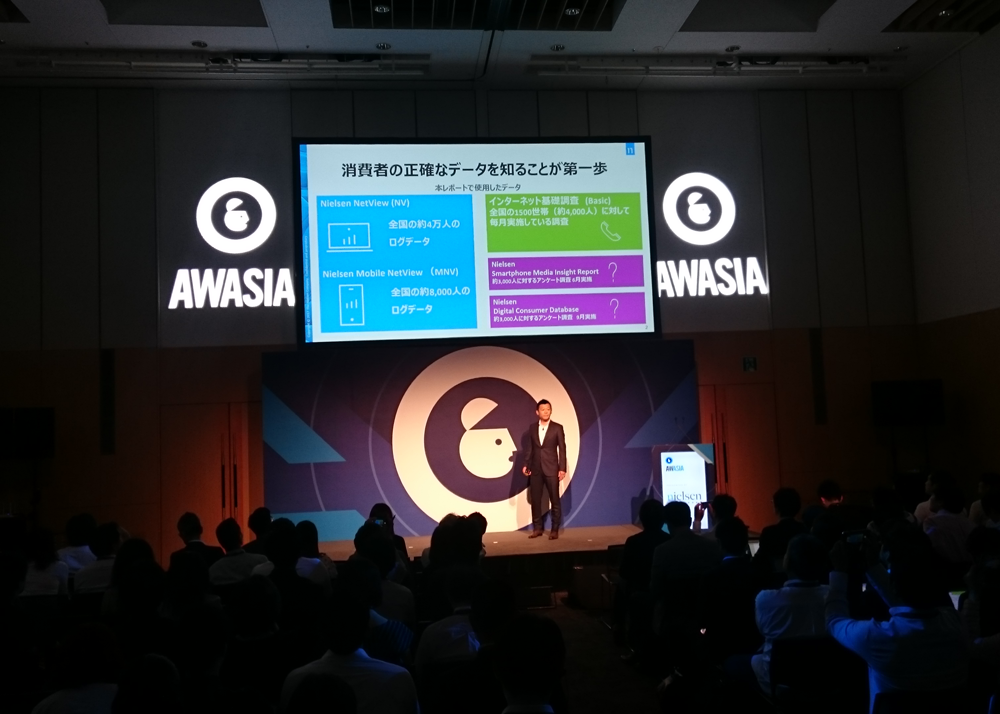
This week, three of our leaders participated in Advertising Week Asia 2017 in Tokyo along with some of the brightest minds across the marketing, advertising, technology and entertainment industries.
Kosuke Yamada, Director of Nielsen Digital, kicked off Nielsen’s presence in a session exploring “The Next Era of Programmatic Advertisement.” On stage with him were Tetsuya Shintani, Country Manager of Trade Desk, and Makoto Nagata, Chief Editor of DIGIDAY Japan. Together they explored what is required for programmatic ads to drive the next wave of mobile advertising, what marketers should do to improve targeting and their expertise, and what is necessary to measure the age of programmatic advertisement.
세션에서 코스케는 프로그래매틱 광고 시대에 서드파티의 측정이 더 중요한 이유에 대해 강조했습니다. "모든 미디어가 동일한 오디언스 데이터를 기반으로 타겟팅을 제공하는 것은 아닙니다. 따라서 정확한 오디언스 속성 정보와 속성에 대한 이해를 바탕으로 오디언스 확장이 올바른 방식으로 이루어지고 있는지 독립적인 측정을 통해 확인해야 합니다."라고 Kosuke는 설명했습니다. "전체 캠페인의 성과와 미디어 간의 성과 차이를 이해해야 합니다."
On day three, Nielsen Japan Digital President Jun Miyamoto hosted an Adweek Data Track session on the topic of transparency in digital ads. Makoto Koide of Shiseido Japan and Toru Takada of Yahoo Japan joined him on the stage to discuss efforts for transparency from the advertiser’s point of view, as well as the media perspective.
궁극적으로 세 사람은 중립적인 제3자에 의한 투명성을 보장하는 측정이 필요하다는 데 동의했습니다. 어떤 유형의 측정이 필요한지에 관해서는 쿠키나 광고 ID 측정이 아닌 사람 기반 측정이 필요합니다. 그리고 측정은 조회 가능성을 파악하는 데만 필요한 것이 아니라 타겟 도달률도 중요합니다.
전 대표는 "디지털 광고 지표를 표준화하고 매체 간 광고 효과를 검증하는 것이 중요하다"며 "앞으로는 TV뿐 아니라 디지털 광고 지표의 표준화도 필요하다"고 말했다.
On the last day of the conference, Satoshi Imada, Senior Analyst of Nielsen Digital, headed to the technology stage as part of the MarTech track. In the session, “Digital Trends 2017,” Satoshi talked about five points to keep in mind when it comes to designing communication about digital for consumers in Japan.
"소비자 행동에 대한 정확한 데이터를 파악하는 것이 커뮤니케이션의 첫걸음입니다."라고 사토시는 설명합니다. "특정 디바이스, OS 또는 사용자 세그먼트에 치우치지 않고 일본 전역의 데이터를 포괄하고, 그 데이터를 사용하여 전체 디지털 환경의 사용 트렌드를 파악하는 것이 중요합니다."
사토시는 스마트폰과 애플리케이션이 최우선 과제이긴 하지만, 여전히 PC 및 브라우저와의 호환성이 필요하다고 경고했습니다. 일본에서는 60%의 사람들이 PC를 통해 인터넷을 사용하며, 여행과 같은 카테고리에서는 PC 사용자가 훨씬 더 많습니다. 마케터는 타겟과 목적에 따라 디바이스 전략을 수립해야 합니다.
In Japan, communication is divided according to the purpose and context of consumers. For example, a 20-34-year-old male frequently uses movies and curation services on a smartphone, while women often use cosmetics, cooking and free market services. When it comes to demographics, however, it’s important to think beyond typical segments. Not only are there differences among generations, but also the services used are different even in the same generation.
For marketers, it’s also important to grasp new services as they appear, and that requires understanding where people gather and spend time, as well as what their specific consumer does with their time. As of October 2016, the greatest numbers of users of new services are on Pokémon GO (11.26 million), SNOW (3.82 million), and AbemaTV (3.8million).
마지막으로 사토시는 스마트폰으로 영화를 시청하는 비율이 높아지는 시대에 디지털 광고의 변화에 대응하는 것이 중요하다고 강조했습니다. 미국에서는 주문형 비디오(SVOD) 이용률이 50%인 반면, 일본에서는 14%에 불과합니다. 광고주들은 이러한 상황에 발 빠르게 적응해야 합니다.
