지난 10여 년 동안 성소수자 커뮤니티에 대한 전 세계의 태도는 극적으로 변화했으며, 그 어느 때보다 콘텐츠에 대한 선택의 폭이 넓어지면서 성소수자 시청자들은 자신이 선택하는 브랜드에 대해 더욱 사회적 의식을 갖고 있습니다. 성장하는 LGBTQ+ 커뮤니티와 이들의 구매력을 공략하고자 하는 광고주에게는 포용성이 가장 중요합니다.
While there has been significant progress in representation the past 20 years, one group still struggling to see themselves in advertising is the Black LGBTQ+ community. Nielsen’s 2022 report on Black inclusion in media found that only 9% of U.S. advertising is directed toward content inclusive of Black LGBTQ+ talent. And subgroups of the LGBTQ+ community are seeing the largest lack of inclusion. Representation of gender non-binary identities, for example, is seen as the least inclusive among advertising with 88% of Black LGBTQ+ people ranking this as non-inclusive compared to 81% overall1.
이러한 대표성 격차는 광고주에게 흑인 성소수자 소비자들과 소통할 수 있는 중요한 기회를 제공합니다. 흑인 성소수자들은 일반 인구보다 자신의 성적 지향 및/또는 성 정체성에 따라 소비자로 타겟팅하는 브랜드에 매우 편안하게 반응할 가능성이 높기 때문입니다.
To connect with Black LGBTQ+ audiences, advertisers need to focus on inclusion, but that inclusion needs to be authentic to be effective. Yet, advertisers are missing the mark when it comes to accurate, intersectional representation. According to Nielsen’s 2022 International LGBTQ+ Report, 54% of Black LGBTQ+ people say avoiding stereotyping is the number one way to improve inclusivity in content—higher than both LGBTQ+ respondents (50%) and total respondents (45%)—signaling that the community feels overly-stereotyped by advertisers today.
We recently spoke with Myles Worthington, Founder and CEO of WORTHI, for a more in-depth discussion about the importance of Black LGBTQ+ inclusivity in media.
Advertisers looking to create more personal connections with Black LGBTQ+ consumers should partner with members of the community, and many are reaching out to social media influencers to be the face of their campaigns. And when it comes to influencers, Black LGBTQ+ consumers want involvement—21% of Black LGBTQ+ people cite commitment to the community and social responsibility as the most relevant attribute they look for in an influencer, outpacing total respondents (17.8%) and LGBTQ+ respondents overall (19.8%)1.
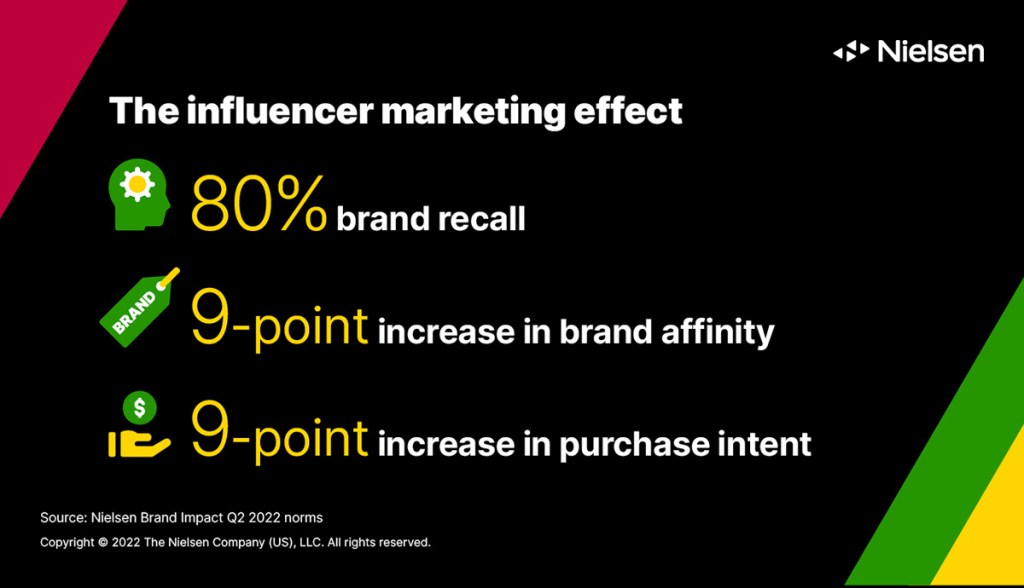
Finding and partnering with the right influencer can increase more than your follower count and video views. According to the 2021 Nielsen Trust in Advertising study, 71% of consumers trust advertising, opinions and product placements from influencers, and influencers drive 80% brand recall and a 9-point increase in both brand affinity and purchase intent relative to consumers who did not see the influencer ads2.
When done right, the strategy is especially impactful with Black audiences—Black adults were 71% more likely to buy products endorsed by influencers on social media3.
흑인 소비자의 경우, 포용성과 진정성이 높아지면 충성도가 높아질 수 있습니다. 2022년 닐슨의 정체성 및 대표성 연구에 따르면 흑인 응답자의 40%는 자신의 정체성 그룹에 속하는 사람이 등장하는 콘텐츠에서 광고하는 브랜드의 제품을 구매할 가능성이 더 높다고 답했습니다. 진정성 있는 흑인 경험에 초점을 맞추고 흑인의 목소리를 증폭시키는 브랜드는 소비자에게 신뢰받는 소스가 될 수 있으며, 구매하고 싶을 때 기억하는 브랜드가 될 수 있습니다.
For additional insights, download Amplifying Black voices in media: Creating informed, thoughtful and authentic experiences.
참고
- 닐슨의 국제 LGBTQ+ 포용적 미디어 인식 연구, 2022년
- 닐슨 브랜드 영향력 2022년 2분기 규범
- 닐슨 스카버러 USA+ 2022 릴리스 1, 소비자 관점