지난 한 해 동안 미디어 환경에서 스트리밍 동영상 콘텐츠만큼 주목받은 분야도 드물었습니다. 플랫폼과 프로그램 선택의 폭이 넓어지면서 소비자 선택의 폭이 계속 넓어지고 다양해지고 있습니다. 스트리밍 사용의 증가는 현재 커넥티드 TV(CTV) 액세스의 동시 증가를 촉진하여 사용자들이 풍부한 온라인 스트리밍 비디오 콘텐츠를 활용할 수 있게 되었습니다. 실제로 현재 미국 가정의 77%가 적어도 한 대 이상의 커넥티드 디바이스를 보유하고 있으며, 2018년 이후 CTV 사용량은 123% 증가했습니다.
Given that CTV advertising combines the scale and influence of linear TV with the precision and personalization of digital, it’s no surprise that eMarketer expects it to reach over $13 billion this year, up 48.6% from 2020. In essence, CTV is bringing linear and digital media buyers onto the same playing field for the first time. Importantly, these buyers have different approaches and knowledge when it comes to ad buying, which can be challenging to reconcile. But with the right perspective, those challenges can be easily navigated to everyone’s benefit.
With consumers rapidly adapting to a new way of consuming content, the key to success is capitalizing on the unique opportunities that CTV offers and coupling this lucrative medium within your omnichannel media plan combined with linear TV and digital. However, the relative newness of ad buying for CTV, coupled with the nuanced nature of the CTV landscape, presents a unique hurdle for marketers with experience in other mediums. Internal knowledge gaps are one of the top three challenges marketers struggle with when it comes to CTV adoption, followed by organizational buy-in and measurement capabilities, as discussed in the recently published 닐슨 연간 마케팅 보고서. The hesitance and uncertainty isn’t surprising, given the myriad of buying options and uncertainty about how to measure it within the context of other buys.
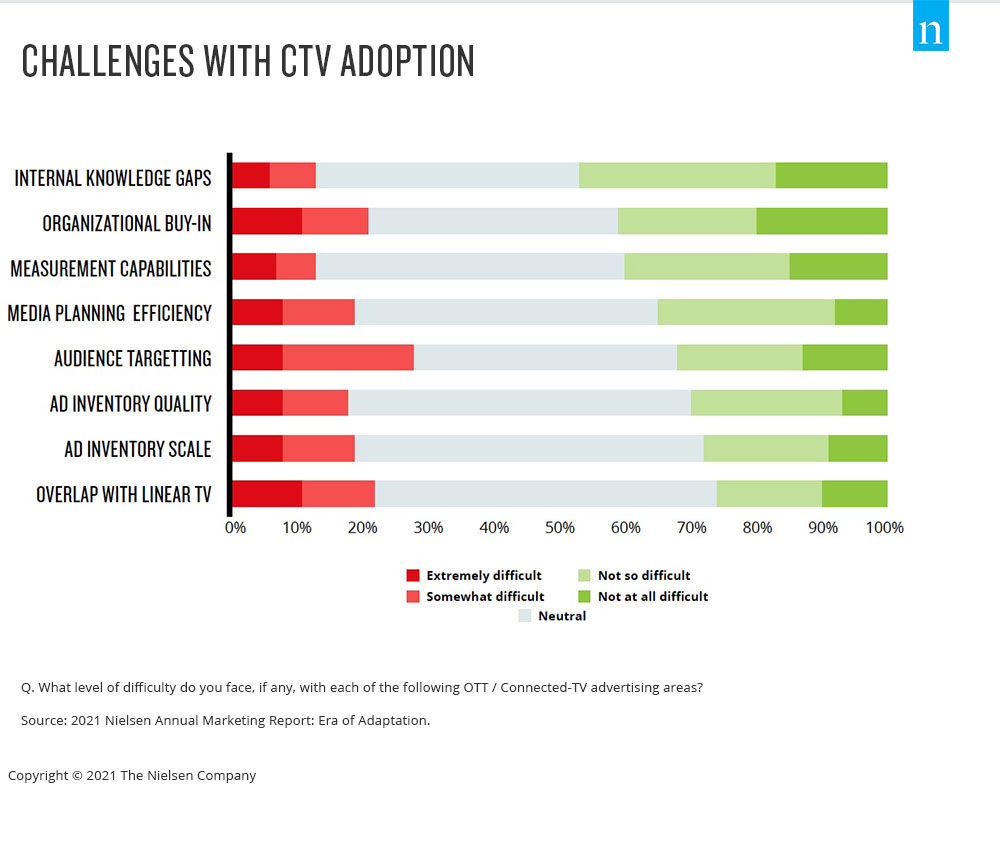
내부 지식 격차는 마케터들이 CTV 도입과 관련하여 가장 어려움을 겪는 3대 과제 중 하나이며, 조직의 동의와 측정 기능이 그 뒤를 잇고 있습니다.
요약하자면, 업계 전반의 마케터들은 CTV가 새로운 기회가 많다는 것을 알고 있지만, 많은 사람들에게는 새로운 영역이고 실행 방법이 너무 다양하기 때문에 마케터들이 해답을 찾지 못한 질문이 많은 것도 당연합니다. 이 가이드를 다운로드하여 시청자 구매에 접근하는 방법과 광고가 타겟 시청자에게 얼마나 효과적으로 도달했는지 측정하는 방법 등 성공적인 CTV 광고 전략을 위한 모범 사례와 일반적인 함정에 대해 알아보세요.