설날을 생각하면 대가족 모임, 대가족 방문, 붉은 세뱃돈, 전통 음식이 떠오릅니다. 어렸을 때는 장수를 기원하는 국수, 부를 기원하는 만두(중국 금괴 모양), 번영을 기원하는 생선, 가족 간의 화합을 기원하는 달콤한 주먹밥 등 모든 상서로운 것을 의미하는 특별한 음식과 함께 대가족 저녁 식사로 명절을 시작했죠. 하지만 코로나19로 인해 가족 방문과 모임이 모두 중단되었습니다. 이제 저는 TV를 통해 향수를 달래고 관련 콘텐츠를 통해 문화와 소통하고 있습니다.
Searching the internet for Asian family programs, I found my choices were somewhat limited, which was surprising given that Asian Americans are the fastest-growing population in America. According to Gracenote 인클루전 분석 data, East Asians like me have a low share of screen, meaning that our visibility across all television programming is only about 2%. When we look deeper, we see that East Asian visibility is a little better on subscription video on demand (SVOD) platforms like Netflix, Amazon Prime and Disney+, but it still barely surpasses 3%.
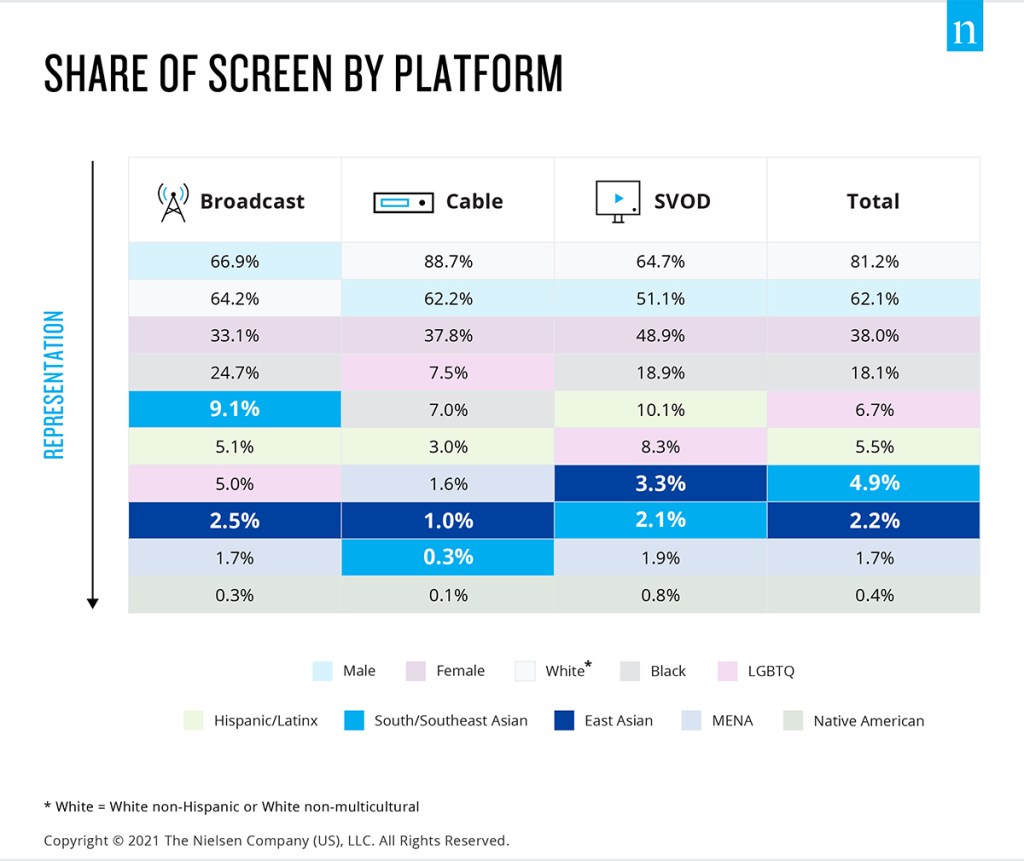
아시아계 미국인의 82%가 스트리밍 서비스에 가입하고(미국 전체 인구의 72%에 비해), 인터넷에 연결된 기기를 통해 (아시아 언어 프로그램과 같은 다른 미디어 퍼블리셔의) 대체 콘텐츠*를 시청할 가능성이 28% 더 높다는 사실을 감안하면, 이러한 높은 인지도를 고려할 때 아시아계 미국인이 스트리밍 서비스에 가입하는 것은 놀라운 일이 아닙니다. 이용 가능한 옵션 중 SVOD 플랫폼은 아시아인과 아시아 이야기를 3%로 가장 잘 표현하고 있지만, 업계는 진정한 이야기와 묘사를 거실로 가져오는 데 더 많은 노력을 기울일 수 있습니다.
As I was looking for content to watch, Fresh Off the Boat, which ran from 2015 to 2020, floated to the top of my internet search. When it premiered, it was the first U.S. television sitcom starring an Asian American family to air on network primetime since Margaret Cho’s All-American Girl, which aired for one season in 1994. Fresh Off the Boat served some authentic laugh-out-loud moments that were true to life, such as when Eddie tells his mom that he wants “white people lunch” and ends up throwing away his own Chinese lunch—reminding me of the time when I packed my daughter’s lunch of fried rice, and she brought it home untouched. My search also returned Minari, a 2020 movie about a Korean family seeking to build a new life as farmers in Arkansas. There are poignant moments, such as when Monica’s mother arrives from Korea, bringing a suitcase full of food like chili powder and dried anchovies, making her daughter cry. This is what we do, carry suitcases full of our food back after a visit to our home countries, giving them to our families to show our love.
Having grown up in Singapore, I love Crazy Rich Asians; not only because it was filmed there, but also because of the beautiful visuals, including hawker food and the familiar streets of Singapore, bringing me just a little closer to home. The movie’s popularity seemed to inspire a new genre of Asian shows—reality TV depicting fabulously wealthy Asians like we see in Bling Empire 그리고 House of Ho. While “rags to riches” themes appeal to many audiences, most of us view these stories as being far from reality. Indeed, there’s a striking gap in the stories being told about Asians. Nielsen’s inclusion analytics report studied themes in programming when an identity group in the audience sees themselves well represented on screen. The themes most present in programming for East Asians are courage, bravery, challenge, justice, sons—all reminiscent of the immigrant narrative, kung fu films and patriarchy. These themes just seem to feed the Asian stereotype.

That said, I was still able to find a handful of Asian movies that celebrate family and food. In most Chinese households, food is the language of love. We aren’t the most demonstrative culture, so cooking and serving people food is how we show our love and respect. I stumbled across content that fed my soul. In Ramen Teh, a Japanese man visits Singapore after his parents pass to learn the secret recipe of the pork rib soup made by his Singaporean mother’s family. Joy Luck Club gave me hope that I will soon reconnect with my family over our favorite foods. Over the Moon was the most touching of all, as it features a scene where the family gathers to celebrate the Mid-Autumn Festival, the second-most important Chinese holiday. The family bantering as they cook and eat, the young girl making sure that her grandpa got the best crab, and the familiar auspicious foods made me cry.
명절에 고향만큼 좋은 곳은 없지만, 직접 갈 수 없을 때는 음식과 가족에 관한 프로그램을 화면으로 보면서 고향에 가는 기분을 느낄 수 있습니다.
*기타 모든 튜닝(AOT): 닐슨이 아직 측정되지 않은 TV 콘텐츠 시청을 분류하는 방식입니다.