Many U.S. consumers began expressing an eagerness to start spending again late last year, and now it seems as though brands and advertisers are starting to catch up. The good news for those brands is that a growing number of consumers believe 2021 will be the year that they will be able to resume their normal activities, and the vast majority of those activities involve spending money.
광고 지출 추세를 보면, 많은 브랜드가 2019년 중반부터 모퉁이를 돌았는데, 이는 한 해 광고 지출 감소의 대부분이 발생한 시기입니다. 2020년 4분기까지 광고 지출은 전년 대비 5% 감소에 그쳤지만, 이전 3개월 동안 전년 대비 훨씬 가파른 감소세를 보였던 것과는 대조적입니다.

Importantly, the increase in ad spend complements rising consumer confidence in the U.S., which increased 16 index points in fourth-quarter 2020 according to the Conference Board’s Consumer Confidence Index. So as consumers increasingly think about life and their activities away from home, brands and marketers need to focus on how individual consumers and consumer groups are prioritizing their re-emergence.
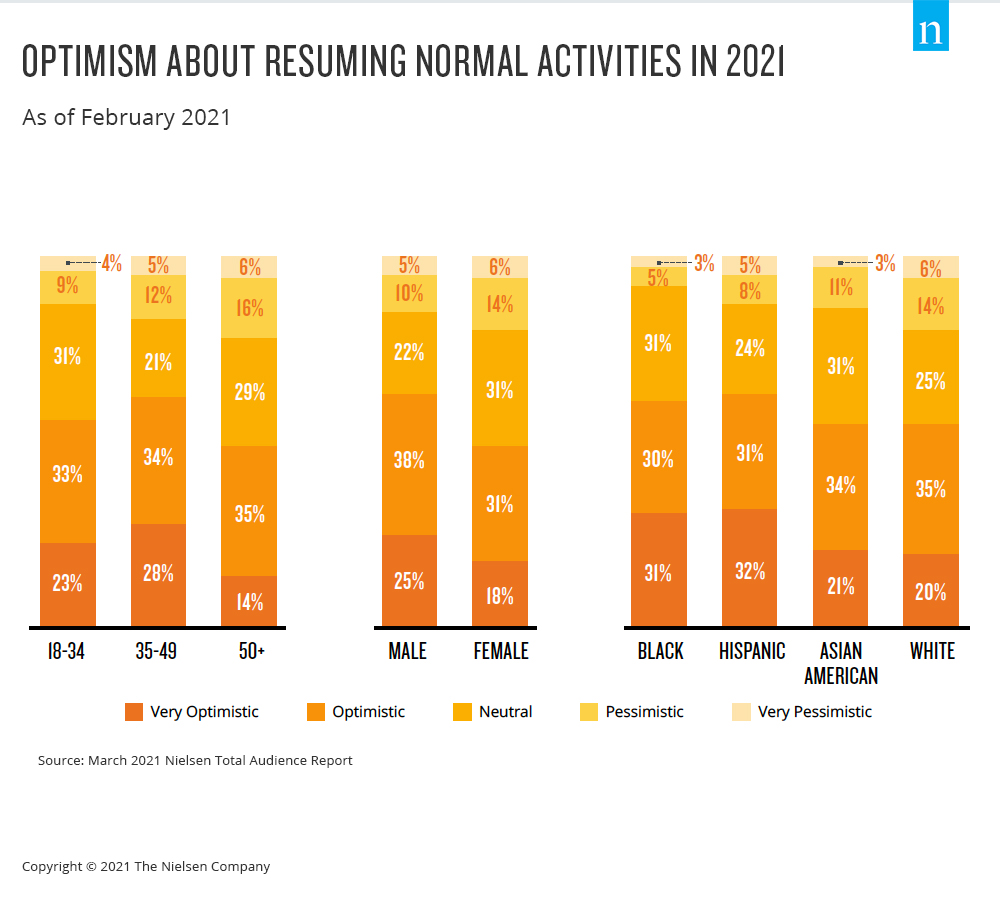
In terms of timing, a recent Nielsen survey found that 55% of Americans 18 and older believe they could get back to their normal routines this year. Men, however, are notably more optimistic than women, as 63% believe this year is the year to return to normal activities, compared with 49% of women.
Financial wellbeing is a critical consideration when it comes to consumer spending habits, and U.S. economic conditions continue to improve from an employment perspective. While the unemployment rate remains above its pre-pandemic level, it has come down dramatically since peaking at 14.7% in April of last year. And what’s more, when it reported a rate of 6.2% in February, the Bureau of Labor Statistics noted that many of the recent gains have taken place in the leisure and hospitality industries.
설문조사에 참여한 미국인의 73%가 휴가를 계획하거나 예약할 의향이 매우 높거나 어느 정도 있다고 답해 여행에 대한 소비자의 관심도와 일치하는 데이터를 확인할 수 있었습니다. 이보다 높은 순위를 차지한 유일한 활동은 직접 종교 예배에 참석하는 것(75%)과 미용실이나 이발소에 가는 것(74%)이었습니다. 비행기 여행에 대한 관심도 증가하고 있으며, 설문 응답자의 67%가 향후 3개월 내에 비행기를 탈 준비가 되어 있다고 답했습니다.
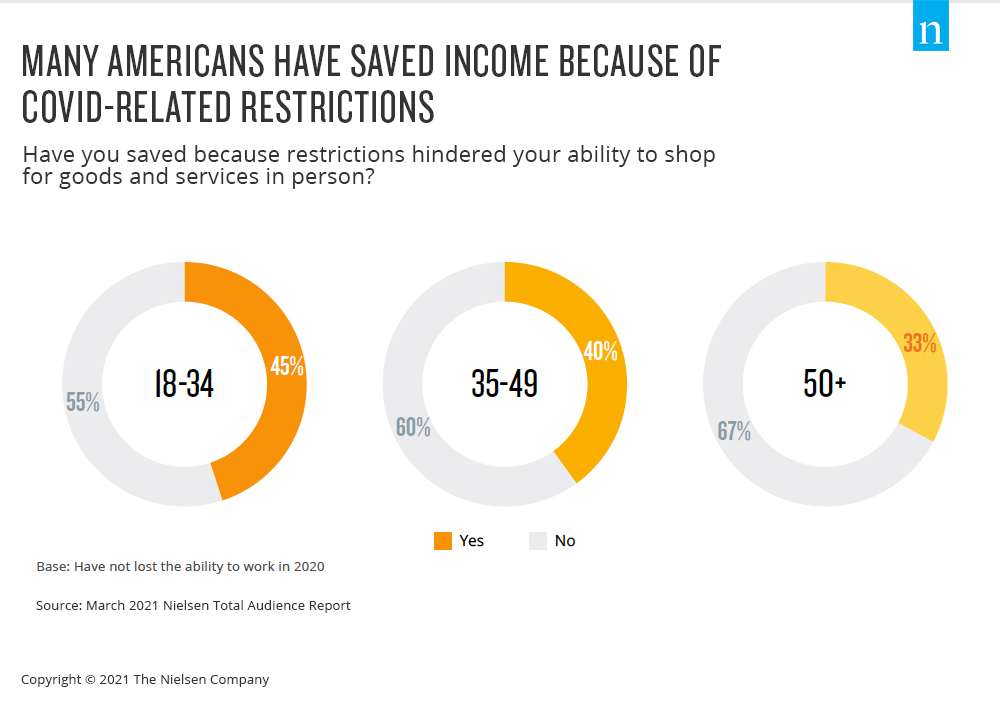
고용 여건이 개선된 것 외에도, 많은 직장 소비자들이 코로나19 관련 제한 조치로 인해 지난 1년간 지출을 줄였다고 답했습니다. 실제로 18~49세 직장인 중 40~45%는 작년에 정상적으로 소비를 하지 못해 수입을 더 많이 저축할 수 있었다고 답했습니다.
작년에 많은 소비자들이 특정 고액 구매를 보류했다는 점을 고려할 때, 이러한 소비 패턴의 변화는 고액 구매의 재등장과 함께 나타날 것으로 예상됩니다. 예를 들어, 작년에 35~49세 성인의 거의 절반과 18~34세 성인의 45%가 500달러 이상을 구매했지만, 이러한 구매는 주로 기술, 가정용 기기, 주택 개량 및 의류에 집중되어 있었습니다. 코로나19 제한이 완화되면서 18세 이상 성인의 40%는 향후 신차 또는 중고차를 구입할 계획이 있다고 답했으며, 20%는 향후 12개월 내에 새 집을 구입할 계획이 있다고 답했습니다.
모든 소비자가 집 밖에서 편안함을 느끼기까지는 다소 시간이 걸리겠지만, 분위기는 바뀌기 시작했습니다. 낙관주의, 정서 및 구매 의향의 개선은 마케터가 자신의 캠페인이 소비자의 사고방식, 즉 점점 더 정상으로 돌아갈 준비가 되어 있고 의지가 있는 것으로 보이는 사고방식을 반영하고 있는지 평가할 수 있는 명확한 지표입니다.
For additional insights, download the latest 닐슨 총 잠재고객 보고서.