Last week, Nielsen executives took center-stage during Advertising Week—the annual conference where celebrities, innovators, marketers and media executives come together to discuss the future of advertising. Our leaders shared their perspectives throughout various sessions on the power of data and information, the future of TV, the importance of taking a stand for what’s right and Nielsen’s role in serving as the source of truth for the media industry.
Dalam dunia data besar dan informasi yang melimpah saat ini, bisnis perlu memastikan bahwa mereka memiliki informasi yang paling lengkap dan dapat diandalkan. Apa yang terjadi jika data tidak lengkap dan tidak dapat diandalkan? Hal ini dapat menyebabkan kesalahan yang merugikan saat bisnis berinovasi, membangun produk generasi berikutnya, dan menciptakan pasar baru. Lebih penting dari sebelumnya untuk memiliki pandangan tentang segmen konsumen yang inklusif dan representatif.
“We can’t win in our mission of being one media truth, unless that truth represents everyone, everywhere,” said David Kenny, CEO and Chief Diversity Officer at Nielsen during his opening remarks for Nielsen’s session at Advertising Week, Beyond the Lens: The Bottom Line Impact of Media Representation. “We have to have a truly representative workforce, products that measure all consumers and we must have a stand in the marketplace that represents everyone.”
Sangat penting bagi perusahaan media untuk menyertakan orang-orang dari semua lapisan masyarakat dalam upaya mereka menuju representasi yang sebenarnya. Selain keragaman ras dan etnis, representasi di media juga harus mencakup pasangan sesama jenis, perempuan, anak-anak, lansia, dan penyandang disabilitas baik di dalam maupun di luar layar, serta dalam pengukuran Nielsen.
In the beginning of the week, Megan Clarken, Chief Commercial Officer, Nielsen Global Media, kicked off the discussion on the importance of diversity and inclusion in media, especially when it comes to women, at an event hosted by the Geena Davis Institute on Gender in Media. The institute, which advocates for gender parity in the media industry, presented television insights from its GD-IQ machine learning tool for the first time and held a panel discussion that featured prominent children’s TV industry executives. Before the panelists shared their stories on how to best address representation and why it’s a crucial component to success, Clarken shared her perspective on why more women need to be on screen.
"Gambar bergerak sangat kuat, dan dengan itu muncul sisi positif yang besar dari hiburan, program pendidikan, informasi dan, jika diperlakukan dengan benar, pemberdayaan," kata Clarken. "Namun yang terakhir ini bergantung pada kesetaraan dalam hal representasi. Hal ini bergantung pada peran yang kuat untuk aktor-aktor perempuan yang kuat, baik tua maupun muda."
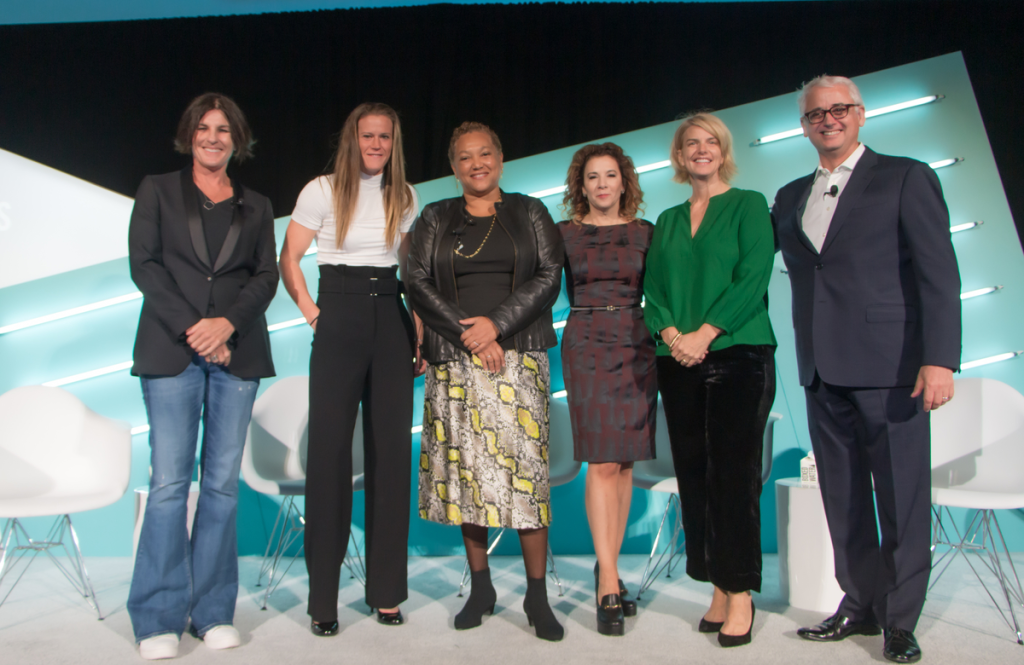
The following day at Advertising Week, Clarken moderated a star-studded panel on the impact that media representation has on consumers, brands and businesses. The panel of leading and influential women included Madeline Di Nonno, CEO, Geena Davis Institute on Gender in Media, Sarah Kate Ellis, CEO & President, GLAAD, Christina Norman, Media Advisor, and Alyssa Naeher, Goalkeeper, U.S. Women’s National Soccer Team & the Chicago Red Stars of the National Women’s Soccer League.
Panel dimulai dengan diskusi seputar representasi karakter perempuan di layar kaca di antara konten anak-anak. Selama dekade terakhir, persentase karakter perempuan di televisi anak-anak tumbuh secara signifikan, dan menurut Geena Davis Institute, karakter perempuan muncul di layar sebanyak 55,3% dan berbicara sebanyak 50%. Ini adalah tonggak penting dan tidak boleh dianggap enteng.
“This is historic…For the first time in history, we have actually achieved parity when it comes to female characters in children’s television,” said Di Nonno.
The discussion then shifted to focus on the progress made over the years to not only portray LGBTQ families on screen, but also to ensure they are counted and represented in national TV ratings. Last year, Nielsen announced that it had worked with GLAAD to ensure same gender spouses/partners and homes were included as part of the ratings that Nielsen reports. Including same gender spouses and homes gives marketers and media companies a better view into the media habits of LGBTQ consumers and their preferences.
As an example, Kenny pointed to the Rachel Maddow Show on MSNBC during the panel introduction. While the show typically ranks within the top 10 cable network programs among all U.S. households each week, it regularly ranks No. 1 as a prime cable program among same gender households. “That’s really important because the pink dollar is really powerful and oftentimes is 2x or 3x its counterpart when it comes to spending power,” said Ellis. “When you are looking to buy spending power [media inventory], you may look at Rachel differently and put more money against an LGBTQ show than another show.”
Organisasi seperti Geena Davis Institute dan GLAAD menggunakan kekuatan data untuk membantu mendorong akuntabilitas dan representasi di layar kaca. Mereka membuat argumen dengan memanfaatkan metrik dan wawasan untuk menunjukkan komposisi penonton, melihat tren dan keterlibatan sebagai pendorong untuk meningkatkan representasi perempuan dan LGBTQ dalam konten. Namun, ada juga pekerjaan yang harus dilakukan untuk memastikan adanya representasi di luar layar dan di antara jajaran eksekutif perusahaan media.
“When you [a network] introduce new programs that celebrate the audience, they can see themselves in it, and it’s reflective in ratings and in the audience that the network attracts now,” said Norman. “It really is about working on both sides—yes, bringing in creators, yes, bringing in the right kind of new content, making sure the stories are reflective of the world that we live in. But it’s also really about making sure that the executives making those decisions have that lived reality as well.”
Representation, inclusion and pay parity are not just challenges faced by the media industry or in business; they’re also a sad and harsh reality that female athletes encounter each and every day. The issue of pay inequality between men and women was a hot topic earlier this year, and it reached a boiling point when the U.S. Women’s National Soccer team won it’s fourth FIFA World Cup in 28 years and shined a light to the huge pay disparity compared to the U.S. Men’s National Soccer team. The issue has now transcended the locker rooms, and brands and businesses have become increasingly vocal regarding the need to achieve equal pay across all segments of society.
"Banyak kemajuan yang telah dicapai selama bertahun-tahun jika Anda kembali ke awal mula wanita dalam olahraga. Saya pikir masih ada kesenjangan yang sangat besar yang perlu terus ditutup. Ini adalah diskusi yang perlu dilakukan, dan meningkatkan kesadaran akan hal itu adalah langkah pertama dalam prosesnya. Saya pikir kesadaran telah meningkat dan orang-orang membicarakannya. Langkah kedua adalah apa yang bisa dilakukan tentang hal itu, langkah apa yang bisa diambil di semua cabang olahraga," kata Naeher. "Obor telah diteruskan. Sekarang menjadi tanggung jawab kami sebagai tim, sebagai pemain dan sebagai individu untuk terus membicarakannya."
Demikian pula, sebagai pembawa standar kebenaran untuk industri media, adalah tugas kami untuk menyoroti pembicaraan yang sulit, membantu membentuk narasi dan menyediakan data yang memungkinkan pengukuran dan representasi semua segmen konsumen. Nielsen tidak menganggap enteng tanggung jawab ini, dan kami terus bekerja sama dengan klien, mitra industri, organisasi masyarakat, dan pemerintah untuk memastikan bahwa kepercayaan dan transparansi dalam media adalah suar yang memandu industri ini ke depan.
"Kami berdiri untuk menciptakan satu kebenaran bagi Anda untuk memahami media, dan kebenaran itu harus menjadi kebenaran semua orang," kata Kenny.
