TV has changed dramatically in recent years. New devices, distributors, streaming platforms, subscription models, and formats are transforming the industry and empowering viewers. But there’s one thing that hasn’t changed: People love to watch TV together.
It depends on the occasion, of course—what the program is, the time of day, the size of the screen, what room it’s in, the size of the family and whether anyone simply happens to be around. But people get together today to watch the Super Bowl or The Bachelorette for the same reason they got together to watch M*A*S*H or the Apollo 11 moon landing half a century ago: to have someone to share the experience with.
In the lingo of the media industry, that’s known as co-viewing. Let’s examine why it’s so important for measurement companies to get it right.
Seberapa sering orang menonton TV bersama?
Di Nielsen, kami telah mempelajari penayangan bersama untuk waktu yang lama. Solusi pengukuran historis kami selalu berbasis orang, bahkan ketika hanya ada beberapa jaringan penyiaran besar. Jadi, kami selalu memiliki sumber kebenaran yang dapat diandalkan untuk mengukur menonton bersama. Saat ini, di rumah-rumah di seluruh Amerika, 47%1 dari TV linear dan TV terhubung (CTV) dikonsumsi oleh lebih dari satu orang dalam satu waktu.
Today, there’s virtually no difference in co-viewing rates between linear TV and CTV, but it wasn’t always the case. Back in 2017, we ran a study with Roku and found a significant gap in co-viewing between linear TV (48%) and OTT (34%). Since then, smart TVs have become more widespread and large screens more affordable. And, increasingly, consumers don’t make the distinctions between linear and streaming or TV and digital. It’s all TV.
But that doesn’t mean that there aren’t any variations and that the same co-viewing factor can be applied across the board. There’s more co-viewing during primetime and on weekends, for sports and children programming, among men, young adults and in houses with more children. It also matters where the TV is located inside the house. Every case is different, and the only way to properly account for co-viewing is to measure it directly or model it separately for every ad impression.
Mengapa harus peduli apakah orang-orang menonton TV bersama?
Most brands want to reach people, not households—and certainly not faceless devices. Wholesale ad impressions are nice, but they’re not enough. When they buy media, advertisers and their agencies spend top dollars to reach specific demographic targets (like 18-34 year-old women in Philadelphia, or 55+ in Arizona) or advanced audiences (like EV drivers who buy organic). They need guarantees that their ads are reaching the right people, and measuring co-viewing gets to the heart of that question.
Perusahaan media, di sisi lain, perlu mengetahui siapa yang menonton konten mereka untuk memahami pemirsa mereka, mengoptimalkan pemrograman mereka, dan menentukan harga inventaris iklan mereka dengan tepat. Jika sebuah acara baru berkinerja sangat baik di kalangan anak muda, misalnya, mereka dapat memesan musim baru, memberi lampu hijau untuk acara serupa, dan mengembangkan pengikut khusus yang dapat mereka hasilkan untuk meningkatkan jumlah pelanggan atau menarik pengiklan yang ingin menjangkau pemirsa.
Dalam lanskap TV yang sangat terfragmentasi dan sangat kompetitif saat ini, perusahaan media tidak lagi menjual 'tonase', dan pengiklan tidak lagi membeli 'bola mata' sembarangan. Mereka semua membutuhkan solusi pengukuran yang dapat membantu mereka membagi pemirsa (di dalam dan di seluruh perangkat), menghitung penayangan iklan yang tepat sasaran, mengoptimalkan jangkauan dan frekuensi, dan meningkatkan indikator kinerja kampanye utama (seperti tingkat efisiensi demo target). Anda tidak dapat mencapai semua tujuan tersebut tanpa pengukuran tingkat orang.
Bagaimana kami mengukur penayangan bersama di Nielsen?
The most direct way to measure co-viewing is to monitor TV viewership at the individual level. That’s the case with our National TV Panel and top Local TV Markets. In these markets, our panelists “check-in” to the audience. But to add more depth and stability to our audience solutions—and provide more visibility into smaller audiences in smaller TV markets—we’re increasingly relying on big data based on ACR (for smart TVs) return-path data (for cable and satellite providers), or device and context identifiers (for ad impressions). And those technologies only capture viewing information at the household level.
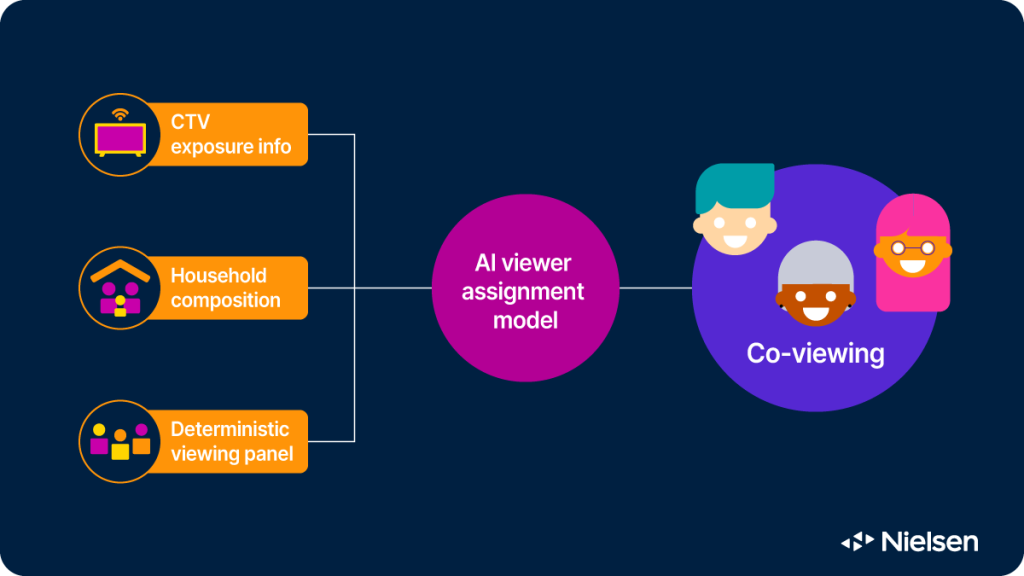
Nielsen is able to determine who is watching thanks to a process called Viewer Assignment that was developed a decade ago and has since been continuously refined. It uses advanced statistical techniques to match faceless viewing data from big data sources (like Roku, Vizio, Hulu, Netflix, YouTube and others) to our persons-level panel data for every possible viewing event and ad impression. The match is based on similarities in viewing behavior (down to the program level) as well as geography, household composition, device type and location inside the house, time of day, day of week, and other key predictors. The model never stops learning, and we’re constantly validating its performance to make sure it’s as close to reality as possible.
Memiliki data panel yang tersedia akan memberikan keuntungan besar untuk memanfaatkan sumber data baru tersebut, tetapi penting untuk diketahui bahwa proses seperti Penugasan Pemirsa tidak dapat mengkompensasi semua kasus data pemirsa yang hilang. Terkadang, tidak ada kecocokan yang dapat diandalkan untuk apa yang kita lihat di data pemirsa, atau komposisi rumah tangga tidak tersedia. Untuk sekitar 9% dari seluruh data CTV, tetap sulit untuk menetapkan demografi pemirsa yang sederhana seperti usia dan jenis kelamin. Dalam hal ini, Nielsen mengandalkan model prediksi yang kuat untuk menginformasikan dan memberikan penugasan pemirsa.
What’s next?
Terobosan metodologis baru-baru ini telah membantu kami menetapkan karakteristik pemirsa ke lebih banyak penempatan iklan-secara signifikan meningkatkan kemampuan kami untuk mengukur jangkauan dalam prosesnya. Model kami terus belajar dari volume data dan sinyal Nielsen yang sangat besar, sehingga prediksi pemirsa kami dapat terus menjadi lebih komprehensif.
Menonton bersama selalu menjadi bagian integral dari pengalaman menonton TV, dan tidak akan berubah dalam waktu dekat. Pastikan hal ini menjadi bagian integral dari strategi pengukuran Anda.
Nielsen’s Need to Know reviews the fundamentals of audience measurement and demystifies the media industry’s hottest topics. Read every article here.
Catatan
1Nielsen Panel Data