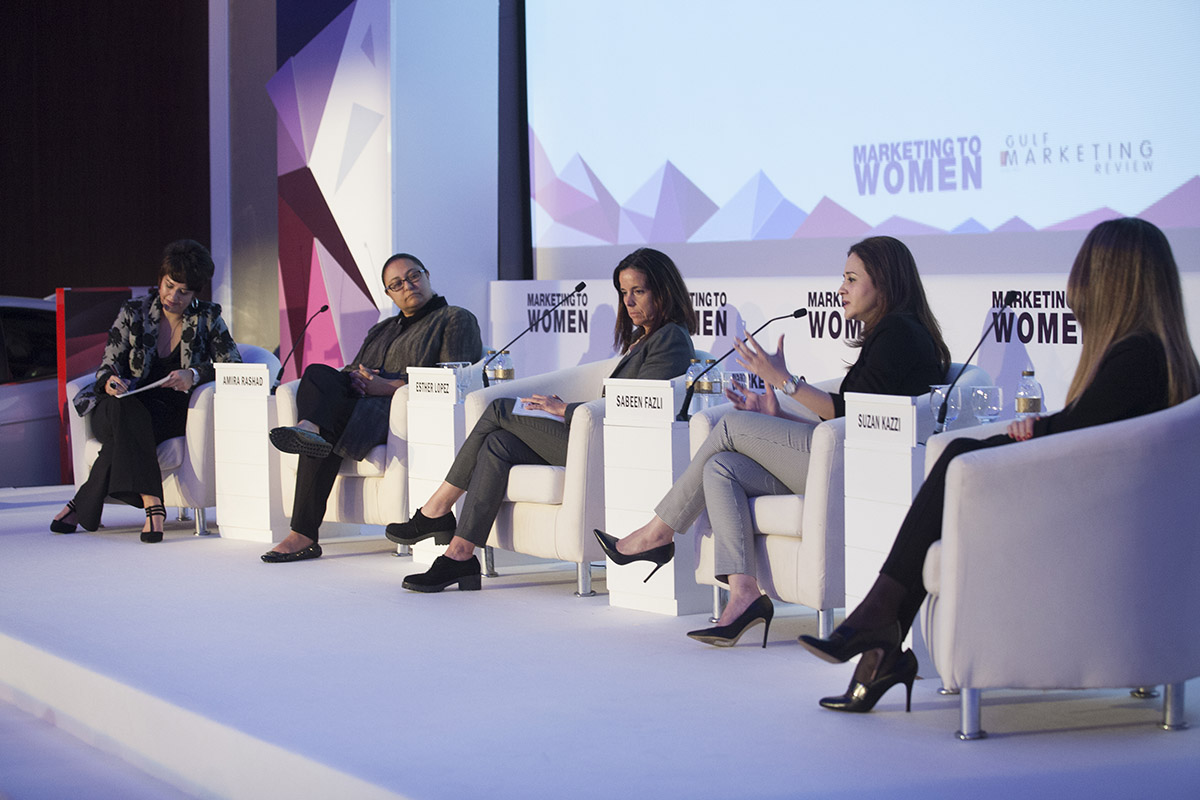
Arab women, specifically those in countries of the Gulf Cooperation Council (GCC), will soon be a force to reckon with—if they aren’t already. While the female Arab population is growing at a 3% rate, women’s participation in the workforce has grown by a whopping 7.2%. Women’s expanded role in the economy is paralleled with higher autonomy in their decision making, be it home or outdoors. More money is also in play—per capita disposable income for women is expected to grow 20% by 2020. Having control of a bigger wallet will definitely affect Arab female expenditure patterns.
On Feb. 8, 2016, Nielsen collaborated with the GMR Marketing to Women conference to share some of the early insights that we have uncovered about Arab women in the GCC. These insights were showcased through five presentations at the conference, which were followed by panel discussions that offered fascinating insights and the trends we see.
The insights highlighted at the conference came from our newly launched ‘Aalam-Al-Nisa’ syndicated survey, a deep dive into the psyche, aspirations and purchasing behavior of the modern Arab woman. The survey leverages exploratory multidimensional techniques, including pre-existing knowledge synthesis, Super Consumer and expert interviews, mini group discussions and quantitative measures. Coupled with innovative styles of data gathering—like generation interviews and EthOS app (a research version of Instagram)—our research is creating insightful accounts to help clients connect and engage with the region’s most influential audience—the Arab woman.
“We observe that women in the Arab world can be change enablers. The demographic is shifting, with fewer children reorganizing the family structure and leading to economic change. Therefore, understanding women’s anchors and transition signifiers becomes pertinent for every marketer to connect with this transitioning consumer segment,” says Diptanshu Ray, executive director, Nielsen Arabian Peninsula.
