Die 66. Saison des Eurovision Song Contest ist angebrochen, und wenn die Vorjahre ein Hinweis darauf sind, wird 2022 ein weiterer Volltreffer, was die Zuschauerzahlen angeht. Gleichzeitig gibt der internationale Musikwettbewerb aber auch einen Einblick in die Emotionen des Publikums - durch die Stimmung der Songs, für die sie stimmen.
In addition to boasting seasons that have attracted more than 180 million viewers each year for the last seven years1, Eurovision’s international audience of music enthusiasts eagerly look forward to rooting for their favorite artists—and discovering new music.
And with the variety of music being presented at this year’s contest, audiences will be able to find a song to suit virtually every mood—because the performers showcase more moods with each new year of competition. According to Gracenote Global Music Data Sonic Descriptors sonic mood analysis of previous Eurovision contests, recent Eurovision winners have displayed far more emotional range than their predecessors. The 40 songs presented at this year’s contest represent 15 different primary moods. And the last 15 winners have represented 12 primary moods, while only 11 moods were represented among the winners of the entire first 40 years of the competition.
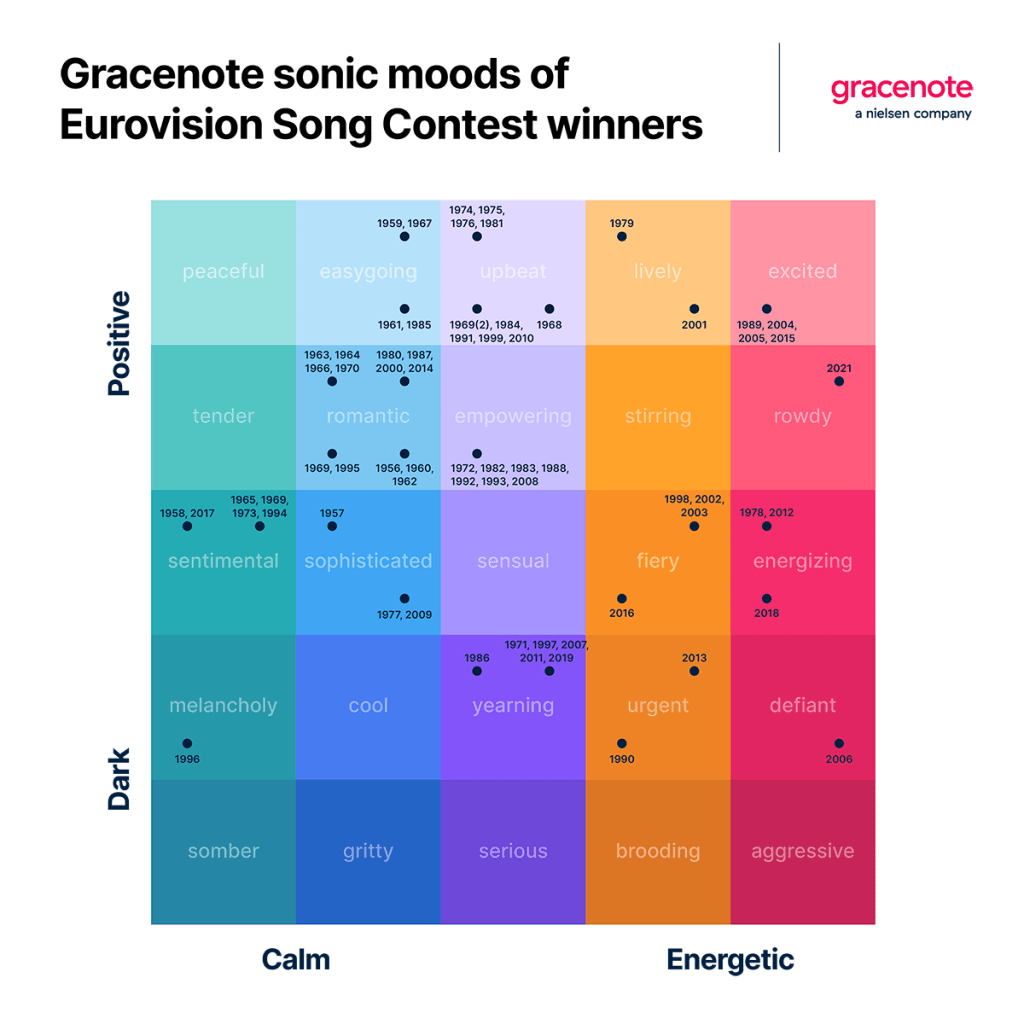
The recent uptick in emotional diversity isn’t surprising—consumers are increasingly looking for experiences that engage with them as individuals, and creators are rushing to fill the gap. American television, for instance, now features 817,000 unique program titles across traditional TV and streaming services, compared with just over 646,000 titles in 20192. For musicians and streaming services looking to reach and engage new audiences, Eurovision trends can be a finger on the pulse of global audiences and their moods.
Und laut der diesjährigen Auswahl sucht das Publikum nach Interpreten, die es anregen und beruhigen. Zwanzig Finalisten - die Hälfte des Teilnehmerfeldes - zeichnen sich durch energiegeladene Stimmungen aus, obwohl diese Kategorie seltener gewonnen wird. Weitere sieben Beiträge sind von ruhigeren Stimmungen geprägt, darunter Einsendungen aus Italien und den Niederlanden - zwei Favoriten auf den diesjährigen Wettbewerbssieg. Dies widerspricht dem Trend früherer Wettbewerbe, spiegelt aber einen jüngsten Stimmungswandel bei den Verbrauchern wider.
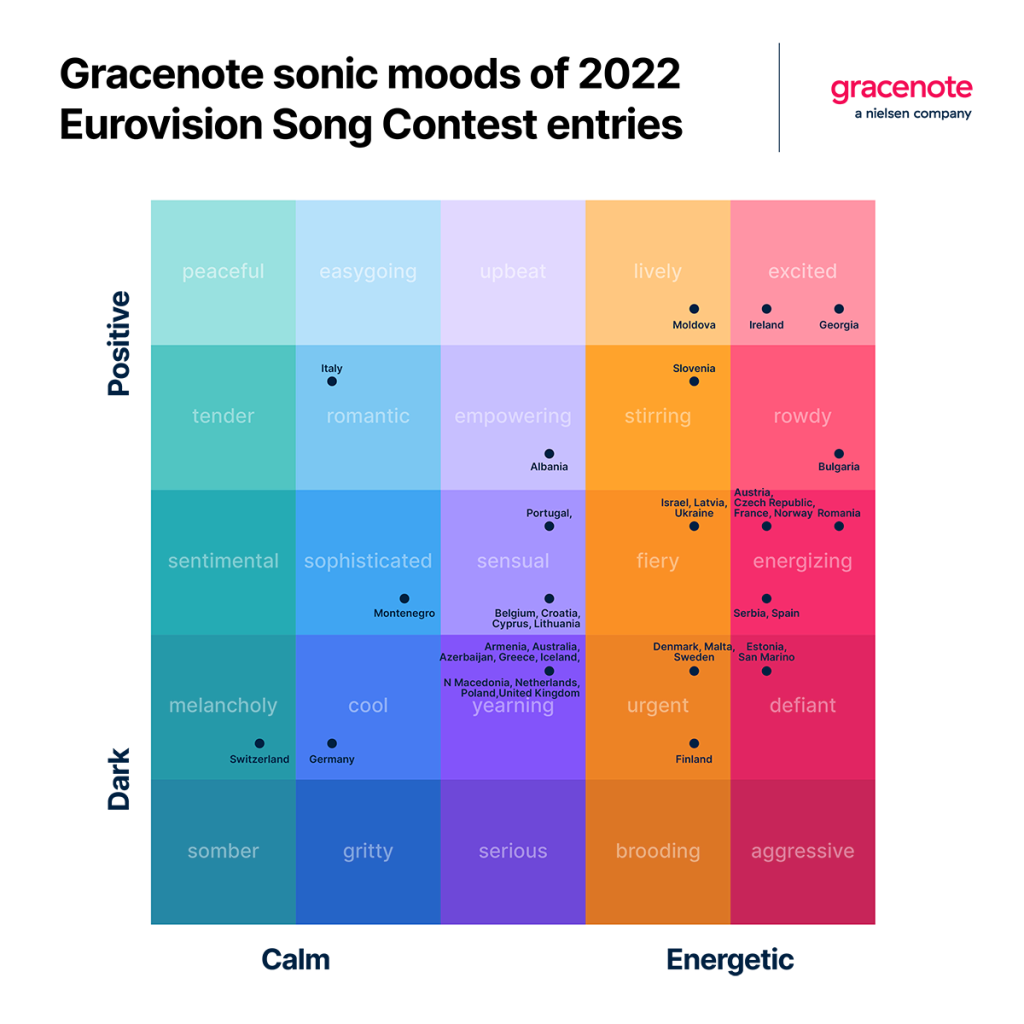
Faced with mounting supply chain woes, increasing inflation and the war in Ukraine, consumer confidence is at its lowest since the pandemic3. It’s no wonder audiences are looking for music that uplifts and reassures them. And Eurovision artists are meeting the moment.
Contrast this year’s trends with last year’s winner: “Zitti e Buoni,” a song classified as rowdy—the first time such a mood has won the competition. At the time of last year’s contest, many countries were lifting their COVID-related restrictions, and consumer confidence in Europe was its highest since October 20183. Americans echoed this sentiment, as a Nielsen custom consumer sentiment study found that in June of 2021, 90% of consumers said they were “ready to go” and get back to normal. Before the omicron spike later in the year, audiences were enthusiastic about emerging from over a year behind doors—and the choice of winner reflects their eagerness.
The benefits of striking the right chord with audiences don’t stop when the contest ends. And much like we see in other high-stakes competitions, Eurovision artists often see success far outside the competition. Out of 68 winning Eurovision songs, 46 have ascended to Billboard’s Top 100 U.K. Singles Chart4. And the 1976 winner, Brotherhood of Man’s “Save Your Kisses For Me,” spent 16 weeks on the chart, six of which were in the No. 1 spot.
Nicht nur Künstler können davon profitieren, wenn sie die Stimmungen des Publikums verstehen und vorhersehen. Musik-Streaming-Dienste können die Stimmungsdaten nutzen, um reichhaltigere Wiedergabelisten und Sender mit einem breiteren Spektrum an Künstlern zu erstellen, so dass die Hörer verschiedene Musikstile und Künstler kennenlernen, die sie selbst vielleicht nicht entdeckt hätten.
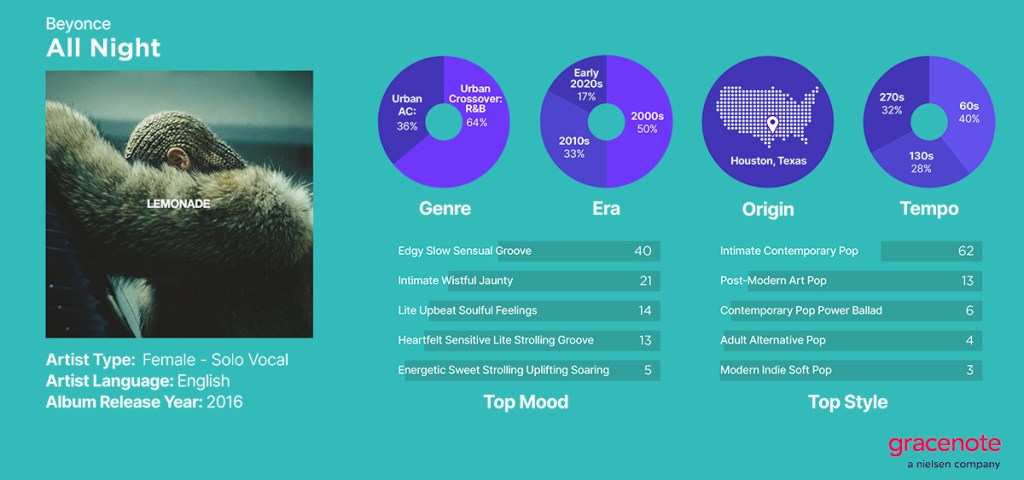
Es ist wichtig, dem Publikum die Suche nach neuen Songs und Bands zu erleichtern, die ihnen gefallen. Die Anwendung von sehr detaillierten Metabeschreibungen, wie z. B. Stimmung, auf Audioinhalte hilft dabei, Verbindungen zwischen Genre, Stimmung, Epoche und Tempo herzustellen, um ein vollständigeres Hörerprofil zu erstellen. Diese Daten ermöglichen differenzierte Entdeckungspfade und bieten Audioempfehlungen, die auf den aktuellen Geschmack des Hörers abgestimmt sind und ihm gleichzeitig sorgfältig kuratierte neue Optionen bieten.
Anmerkungen
- Europäische Rundfunk- und Fernsehunion
- Gracenote Globale Videodaten, Februar 2022
- Die Organisation für wirtschaftliche Zusammenarbeit und Entwicklung (OECD)
- Anschlagtafel