Die weltweite Einstellung gegenüber der LGBTQ+-Gemeinschaft hat sich in den letzten zehn Jahren dramatisch verändert, und mit einer größeren Auswahl an Inhalten als je zuvor ist das LGBTQ+-Publikum sozial bewusster bei der Wahl der Marken. Für Werbetreibende, die die wachsende LGBTQ+-Gemeinschaft - und deren Kaufkraft - für sich gewinnen wollen, ist Inklusivität alles.
While there has been significant progress in representation the past 20 years, one group still struggling to see themselves in advertising is the Black LGBTQ+ community. Nielsen’s 2022 report on Black inclusion in media found that only 9% of U.S. advertising is directed toward content inclusive of Black LGBTQ+ talent. And subgroups of the LGBTQ+ community are seeing the largest lack of inclusion. Representation of gender non-binary identities, for example, is seen as the least inclusive among advertising with 88% of Black LGBTQ+ people ranking this as non-inclusive compared to 81% overall1.
Diese Repräsentationslücke stellt eine große Chance für Werbetreibende dar, mit schwarzen LGBTQ+-Konsumenten in Kontakt zu treten, da diese sich eher als die Allgemeinbevölkerung damit wohlfühlen, wenn Marken sie aufgrund ihrer sexuellen Orientierung und/oder Geschlechtsidentität als Konsumenten ansprechen.
To connect with Black LGBTQ+ audiences, advertisers need to focus on inclusion, but that inclusion needs to be authentic to be effective. Yet, advertisers are missing the mark when it comes to accurate, intersectional representation. According to Nielsen’s 2022 International LGBTQ+ Report, 54% of Black LGBTQ+ people say avoiding stereotyping is the number one way to improve inclusivity in content—higher than both LGBTQ+ respondents (50%) and total respondents (45%)—signaling that the community feels overly-stereotyped by advertisers today.
We recently spoke with Myles Worthington, Founder and CEO of WORTHI, for a more in-depth discussion about the importance of Black LGBTQ+ inclusivity in media.
Advertisers looking to create more personal connections with Black LGBTQ+ consumers should partner with members of the community, and many are reaching out to social media influencers to be the face of their campaigns. And when it comes to influencers, Black LGBTQ+ consumers want involvement—21% of Black LGBTQ+ people cite commitment to the community and social responsibility as the most relevant attribute they look for in an influencer, outpacing total respondents (17.8%) and LGBTQ+ respondents overall (19.8%)1.
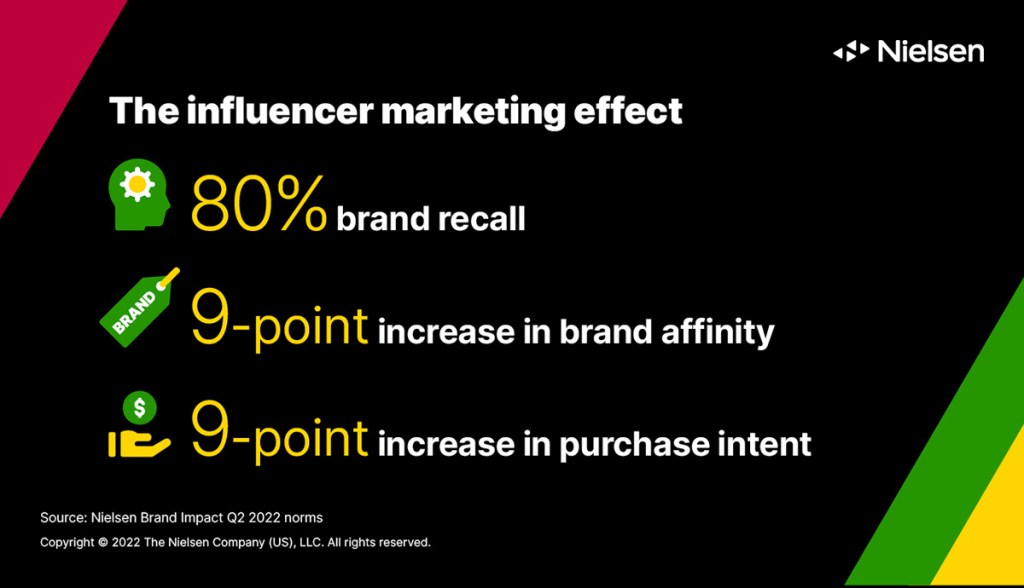
Finding and partnering with the right influencer can increase more than your follower count and video views. According to the 2021 Nielsen Trust in Advertising study, 71% of consumers trust advertising, opinions and product placements from influencers, and influencers drive 80% brand recall and a 9-point increase in both brand affinity and purchase intent relative to consumers who did not see the influencer ads2.
When done right, the strategy is especially impactful with Black audiences—Black adults were 71% more likely to buy products endorsed by influencers on social media3.
Für schwarze Verbraucher kann eine stärkere Einbeziehung und Authentizität zu einer stärkeren Loyalität führen. Eine Nielsen-Studie zu Identität und Repräsentation aus dem Jahr 2022 ergab, dass 40 % der befragten Schwarzen mit höherer Wahrscheinlichkeit Produkte von Marken kaufen, die mit Inhalten werben, in denen jemand aus ihrer Identitätsgruppe vorkommt. Marken, die sich auf authentische schwarze Erfahrungen konzentrieren und schwarze Stimmen verstärken, können zu einer vertrauenswürdigen Quelle für Verbraucher werden - und zu der Marke, an die sie sich erinnern, wenn sie einen Kauf tätigen wollen.
For additional insights, download Amplifying Black voices in media: Creating informed, thoughtful and authentic experiences.
Anmerkungen
- Nielsens internationale Studie über die Wahrnehmung von LGBTQ+ Medien, 2022
- Nielsen Brand Impact Q2 2022 Normen
- Nielsen Scarborough USA+ 2022 Release 1, Verbraucher-POV