For consumers around the globe, mobile phones have become ubiquitous—providing instant, real-time access to information, social networks, entertainment and connectivity. In Africa, the world’s second-largest mobile market behind Asia, that connectivity has super-charged the mobile money industry, with Sub-Saharan Africa (SSA) now accounting for 43% of the world’s active mobile money accounts.
Die weit verbreitete Annahme von mobilen Zahlungsdiensten (M-Payment), die während der COVID-19-Pandemie beschleunigt wurde, hat viele Afrikaner dazu veranlasst, Kryptowährungen als einen natürlichen nächsten Schritt zu betrachten - einen, der von konventionellen Bankensystemen entfernt ist und Schutz vor Währungsabwertung bietet. Tatsächlich hat der Begriff "Krypto" in diesem Jahr in mehreren afrikanischen Ländern an Bedeutung gewonnen, angeheizt durch die Einführung einer Reihe von hochkarätigen digitalen Währungen, Abwicklungsplattformen und Blockchain-Anwendungen.
SSA has been at the forefront of the mobile money industry for over a decade, largely because a growing network of fintech companies have stepped in to provide digital payment options to consumers who lack access to a formal savings account or credit. According to the Fintech Times, approximately 57% of the country’s population do not have a traditional bank account. Comparatively, the Wall Street Journal reported late last year that SSA alone is now home to nearly half of the world’s 1.04 billion registered mobile money accounts.
Die hohe Akzeptanz von mobilen Bankdienstleistungen in Afrika in Verbindung mit der Tatsache, dass der Kontinent die jüngste Bevölkerung weltweit hat, steigert das Interesse an und das Bewusstsein für Kryptowährungen. Und da es sich um die jüngsten Verbraucher der Welt handelt, sind digitale Zahlungen und Kryptowährungen weitaus attraktiver als traditionelle Bankangebote. Für diese mobilitätsorientierten Verbraucher bieten digitale Zahlungen und Währungen finanzielle Unabhängigkeit und Freiheit, und sie sind optimistisch, was die Zukunftsaussichten von Kryptowährungen angeht. Daraus ergeben sich bemerkenswerte Chancen für Anbieter, Plattformen und Dienstleistungen in der gesamten Telekommunikations- und Finanzdienstleistungslandschaft.
Adoption of crypto currencies, particularly across emerging economies, has skyrocketed this year, with blockchain data company Chainalysis reporting global adoption growth of more than 2300% between Q3 2019 and Q2 2021. Africa represents the world’s smallest crypto economy (2% of global value), but the prominence of this form of money is accelerating adoption. In fact, Nigeria, Africa’s largest economy, recently became the first nation on the continent to roll out its own digital currency: the eNaira.
But buzz about crypto started well before the introduction of the eNaira. Many consumers across the continent began learning about digital currencies when Senegalese-American singer and entrepreneur Akon announced plans in 2018 to build a blockchain and crypto currency-powered city in Senegal. Consequently, Akon’s “Akoin” currency that he wants to power Akon City, his planned sustainable smart city in Senegal, is among the most popular crypto topics that Nielsen has been tracking across the media landscape.
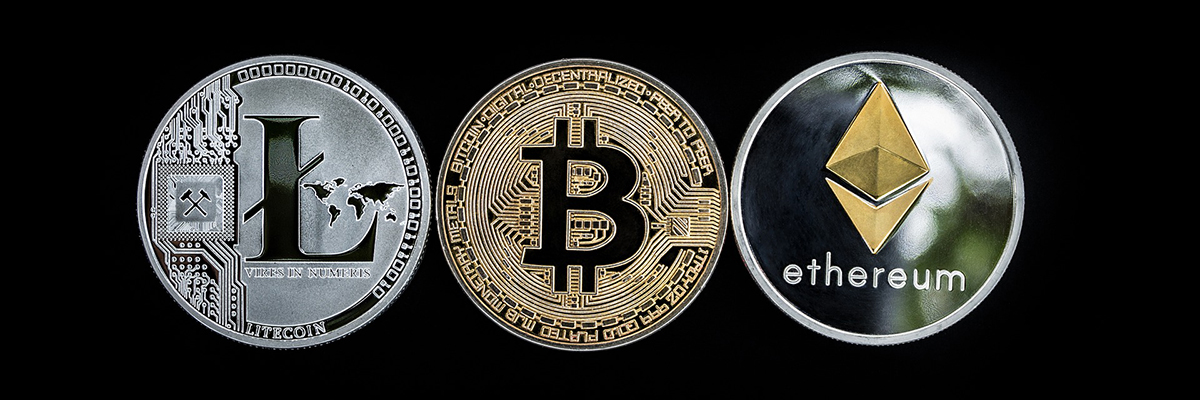
Despite the buzz about Akon and Akoin, however, Bitcoin is the most discussed crypto currency in Africa, accounting for 63% of conversations about digital currencies, followed by Ethereum (10%) and Doge (7.5%). More importantly, overall consumer sentiment about digital currencies is neutral to positive. While growing and lucrative—even sanctioned by governments—the crypto landscape is fertile for scams, with many attaching themselves to aspects of pop culture, including the recent Squid Game cryptocurrency.
As technology advances infrastructures and sustainable development, fintech will grow to play a particularly important role for emerging economies. Strategy&, PwC’s consulting business, expects cashless transaction volume in Africa to increase 78% through 2025 and then 64% between 2025 and 2030.
Bei so vielen Möglichkeiten, die vor uns liegen, müssen die Unternehmen angesichts der großen und wachsenden Auswahl an Optionen, die den Verbrauchern zur Verfügung stehen, sinnvolle Beziehungen zu den Verbrauchern aufbauen und pflegen. Wie bei jeder Marketingmaßnahme müssen Marken ihren Wert für die Verbraucher unter Beweis stellen, ihre Loyalität aufrechterhalten und sie in den Mittelpunkt ihres Handelns stellen.