This year marks the 51st anniversary of the celebration of PRIDE month in the U.S. There’s a lot for the LGBTQ community to celebrate in 2021, just one year after PRIDE parades and celebrations were cancelled in 2020 as a result of the pandemic. The strength and size of the community is more visible than ever. For the first time in 2019, the U.S. Census Bureau’s America’s Families and Living Arrangements included estimates of same-sex households, showing 543,000 same-sex married households, and a Gallup study recently noted that LGBT identification has risen to 5.6%.
Da die LGBTQ-Gemeinschaft immer größer geworden ist, besteht kein Zweifel daran, dass die digitale Vernetzung vielleicht der einflussreichste Faktor für den Fortschritt der LGBTQ-Gemeinschaft ist. Sie hat die Isolation verringert, sichere Räume für die Selbstdarstellung geschaffen, Möglichkeiten geboten, eine ungleiche Gemeinschaft zu verbinden, und einen einfachen Zugang zu Bildungsressourcen und kuratierten Inhalten ermöglicht. Die Technologie hat der Gemeinschaft auch einen Ort gegeben, an dem sie authentisch gesehen werden kann. Von Fernseh- und Streamingdiensten bis hin zu Podcasts und Musikdiensten haben die Entwicklung von und der Zugang zu LGBTQ-Inhalten und -Talenten exponentiell zugenommen.
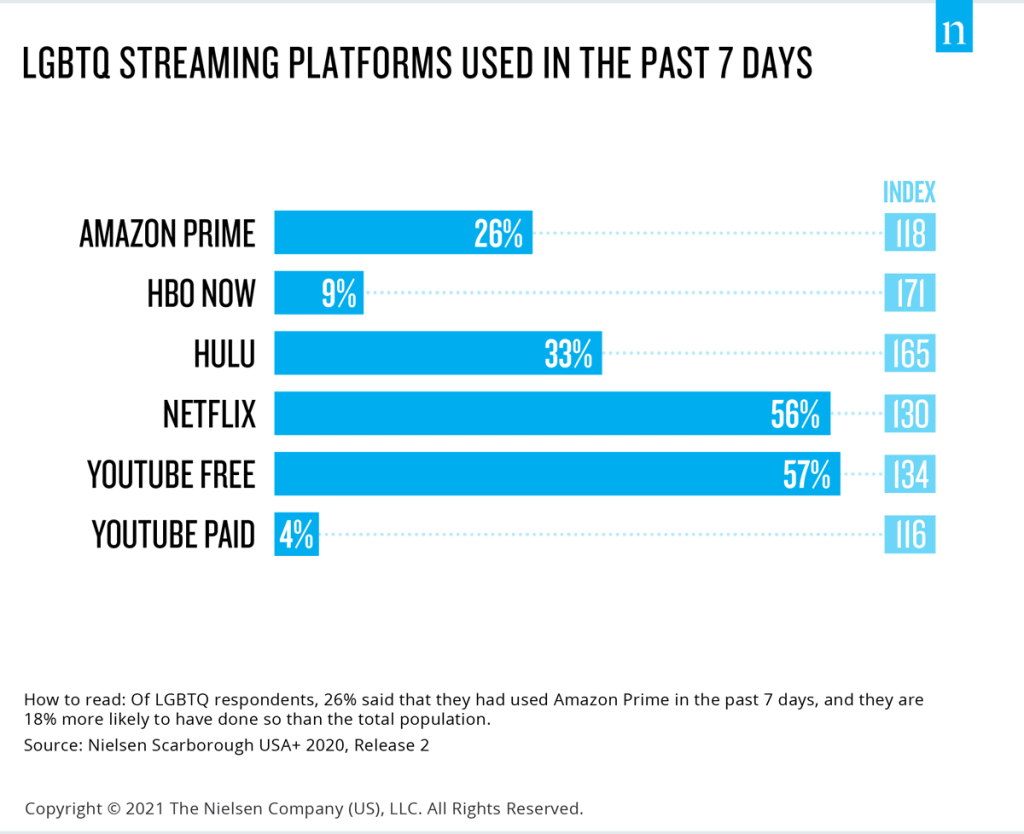
Die digitale Konnektivität hat eine technikaffine Gemeinschaft mit einer Neigung zu digitalem Engagement hervorgebracht. Infolgedessen hat sich das Videostreaming zu einem wichtigen Medium für den Konsum von Inhalten entwickelt, das mit maßgeschneiderten Inhalten lebt. Während Streaming für alle Amerikaner zum Alltag gehört, geben 85 % der LBGTQ-Personen an, in den letzten 30 Tagen einen Video-Streaming-Dienst genutzt zu haben, verglichen mit 74 % in der Allgemeinbevölkerung. Unter diesen Diensten ist YouTube ein beliebtes Streaming-Angebot für das LGBTQ-Publikum, dessen Nutzung dieser Plattform um 34 % höher ist als die des allgemeinen Publikums.
For LGBTQ people, sexual orientation discrimination and religious persecution is still a concern in many parts of the world. Social media channels have empowered the community to organize and connect online, leading to heavy social media use when compared to the total population. Flexing their social muscle within online communities, more than 40% spend 3 or more hours per day on social media and are 44% more likely to have spent 5+ hours a day on social media. The Queer community is further driving culture as content creators. This community is 30% more likely to have used Snapchat, Instagram and Twitter in the last month than the general population. Given the reach and power of these platforms, the industry as well as advocacy organizations have acted to ensure that social media platforms are safe spaces for inclusive content and dialogue. Earlier this year, GLAAD launched the Social Media Safety Index, encouraging the industry to fight the anti-LGBTQ hate speech and misinformation so prevalent in the social media landscape.
As the community expands its footprint in social content development, curated theatrical and episodic content is the next frontier in the march for equality. Representation in movies, television shows, and ads can help fight bias where too often stories are centered around violence toward the LGBTQ community or a stereotypical portrayal. The fact is, LGBTQ storylines and characters have grown in on-screen presence over the years, but only recently have we seen an increase in representation of this identity group at the talent level. Gracenote Eingliederungsanalyse data showed that 26% of the top 300 programs in 2019 had representation of individual cast members who self-identify as LGBTQ. That number has increased to 29% in 2020—a small shift in the right direction. Equally important are the platforms where visibility occurs. LGBTQ stories and talent are becoming more easy to find across the television landscape.
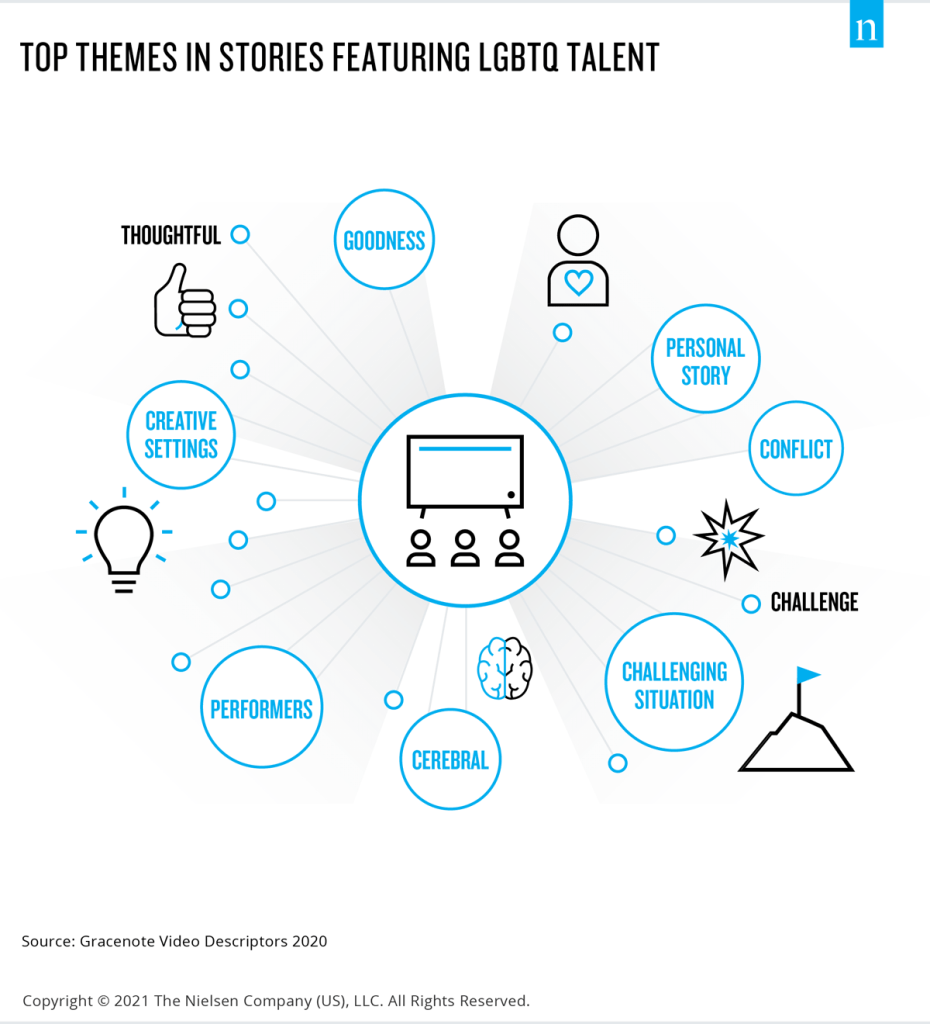
Aufgeschlüsselt nach Plattformen zeigen die Daten von Gracenote Inclusion Analytics, dass im Jahr 2020 die meisten queeren Talente im Fernsehen und im abonnierten Video-on-Demand (SVOD) vertreten waren (7 %), gefolgt vom Kabel (6 %). Mit der höchsten Repräsentation von queeren Talenten bietet SVOD dem Publikum aussagekräftige Inhalte, die auf Resonanz stoßen, und macht es für Queer-Publikum einfacher, relevante Programme zu finden. Dieser Anstieg in der Repräsentation deutet auf mehr Möglichkeiten für LGBTQ-Talente und auf mehr Offenheit in der Branche und beim Publikum hin, das sich auf vielfältige Erzählungen einlässt.
Early this year, when the House of Representatives passed the amendment to the Equality Act, it would not only expand discrimination protections, but also support public dialogue about LGBTQ people’s lived experiences and how they are reflected and included in content. From the inclusion of authentic storylines in mainstream romance genres, to increasing transgender and nonbinary visibility, civil rights dialogue has opened the door for narratives—shaping not only what stories are told but how they end, and whether or not that includes marriage or family.
Defining gender and sexual identities and fighting the erasure of those identities, LGBTQ people and allies have worked to accelerate acceptance. This PRIDE month is a reminder to support and celebrate a community who is proud und present.
Additional Resources
Learn more about LGBTQ audiences and families, as well as their viewing behaviors.