Pride month is over—now what? The month that celebrates the LGBTQ+ community took a while to take root, but June has become the main time when marketers pull out their rainbow branding and feature LGBTQ+ people in their ads—all in an effort to connect with these consumers. With spending power that investment research firm LGBT Capital estimates at $3.7 trillion globally, LGBTQ+ consumers know their worth and expect representation in content and advertisements throughout the year that reflect it. Attempts to cash in on Pride aren’t only easy to spot, they’re especially jarring for LGBTQ+ people, who still experience discrimination and run the risk of losing their human rights as a result of proposed legislations. Showing solidarity and support in June is great, but there’s still a lot to be done year-round to advance equality for LGBTQ+ people.
Marken, die "Regenbogenkapitalismus" betreiben, ohne konsequent Wertschätzung oder greifbare Unterstützung für die LGBTQ+-Gemeinschaft zu zeigen, werden von LGBTQ+-Konsumenten und ihren Verbündeten unter die Lupe genommen. Unterstützung für eine Gemeinschaft bedeutet mehr als Erklärungen oder Paraden. Mehr als 50 % der Verbraucher erwarten von den Unternehmen, bei denen sie einkaufen, dass sie die Anliegen, die ihnen am Herzen liegen, unterstützen, und erwarten daher kontinuierliche Maßnahmen, Fürsprache und Einbeziehung. Ohne diese authentische Unterstützung wird es in diesem sich wandelnden Markt schwierig sein, Markenbekanntheit aufzubauen und Aufträge von LGBTQ+ Verbrauchern und Verbündeten zu erhalten.
Marken, die einen "Regenbogen-Kapitalismus" betreiben, ohne konsequent ihren Wert für die LGBTQ+-Gemeinschaft zu demonstrieren oder sie spürbar zu unterstützen, stehen auf dem Prüfstand. Mehr als 50 % der Verbraucher erwarten von den Unternehmen, bei denen sie einkaufen, dass sie die Anliegen, die ihnen wichtig sind, unterstützen, und erwarten mehr kontinuierliche Maßnahmen, Befürwortung und Einbeziehung.
LGBTQ+ consumers are looking to brands to expand their inclusive messaging throughout the year, and these efforts are a key way that advertisers can build ongoing connections with this community. Outside of Pride Month, Nielsen Ad Intel data shows that ads with representation of LGBTQ+ people are hard to find on TV. In fact, just one week of primetime advertisements in June 2021 aired a more diverse selection of ad categories featuring or targeting LGBTQ+ consumers than the entire month of February. Naturally, brands are rushing to celebrate during the month of June, but if that is the only time they’re engaging or representing LGBTQ+ people, they may be missing the mark. The lack of LGBTQ+ inclusive ads at other times throughout the year shows there’s room for improvement.
Angesichts des Mangels an LGBTQ+ inklusiven Werbespots außerhalb des Monats Juni besteht für Marken eine große Chance, die Darstellung von LGBTQ+ Menschen in ihren Werbespots zu erhöhen, ohne mit all den anderen Pride-fokussierten Kampagnen konkurrieren zu müssen. Basierend auf den Daten von Nielsen Ad Intel für Februar 2021 wiesen beispielsweise nur 1 % der fast 10.000 in der linearen Primetime-Fernsehwerbung geschalteten Anzeigen eine LGBTQ+-Darstellung (Personen, Themen, Themen usw.) in ihrer Gestaltung auf. Während dieser Prozentsatz an sich schon niedrig ist, wird er noch bemerkenswerter, wenn man bedenkt, dass viele der Marken, die Unternehmenssponsoren der Pride-Month-Feierlichkeiten waren, keine LGBTQ+-Darstellung in ihrer Fernsehwerbung zur Hauptsendezeit im Februar hatten. Tatsächlich enthielten nur zwei der 48 Marken, die im Februar 1.000 oder mehr Anzeigen schalteten, eine LGBTQ+-Darstellung. Wenn LGBTQ-Themen in der Werbung vorkamen, waren die vertretenen Marken überwiegend in der Pharmakategorie angesiedelt und machten 16 % des gesamten inklusiven Werbevolumens aus.
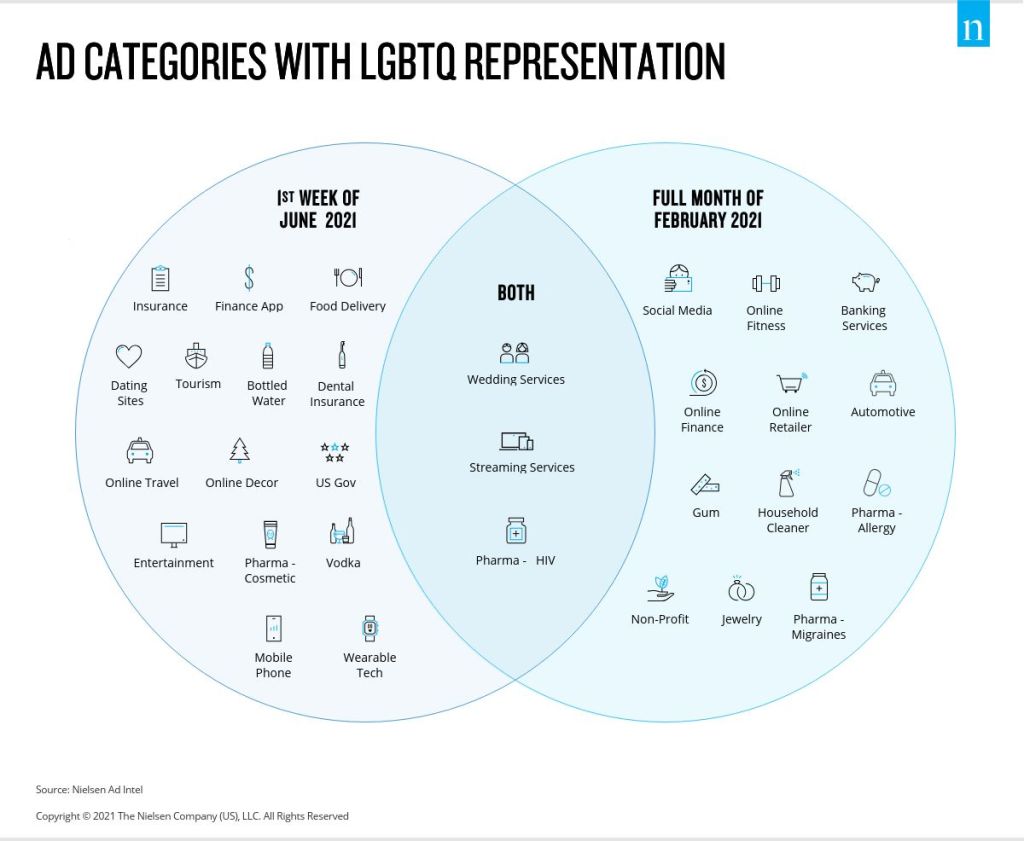
The progress made since the historic Stonewall Riots that inspired Pride to the mainstream parades and marches of today are changes worthy of celebration. But the fight continues, and media has a critical role to play—from more nuanced targeting to increasingly diverse storytelling on TV. As many content creators across television embrace this opportunity for representation, it’s no surprise that two of the top advertisers (based on number of unique ads) featuring LGBTQ+ representation in February were streaming services.
Wie können Werbetreibende bei der Ansprache von LGBTQ+-Konsumenten und -Verbündeten vermeiden, dass sie nach dem Motto des Monats verfahren?
Start with a commitment to ongoing and long-term interactions with the LGBTQ+ community—not just promotions during June. Today’s savvy consumers are even more wary of superficial brand behavior after a year that upended the status quo. Brand messaging once a year won’t be enough if you really want your brand to break through. Working with media that’s focused on the community, like Revry, is one way to maintain engagement year round.
"Wir bei Revry sehen nicht nur das ganze Jahr über den Wert der LGBTQ+-Community, wir leben ihn auch. Wir kennen die Auswirkungen auf das queere Publikum und die Verbraucher, die nach einer genauen und nuancierten Darstellung in den Inhalten suchen. Und wir kennen den Wert, den unser Publikum für Marken darstellt, die in eine respektvolle und menschliche Ansprache unserer Community investieren."
Damian Pelliccione, Mitbegründer und CEO von Revry
Ensure that your brand messaging is authentic to what matters to LGBTQ+ people—like equality, community wellbeing, culture and policy. In a recent GLAAD study, senior management at ad agencies supported featuring LGBTQ+ people in campaigns, but felt that their teams lacked the expertise and knowledge to get the representation “right,” a disconnect that may be driving reluctance to expand LGBTQ+ inclusive brand messaging. Agencies and advertisers can work to close this gap by engaging with organizations like GLAAD and empowering LGBTQ+ business resource groups in their companies to educate their colleagues.
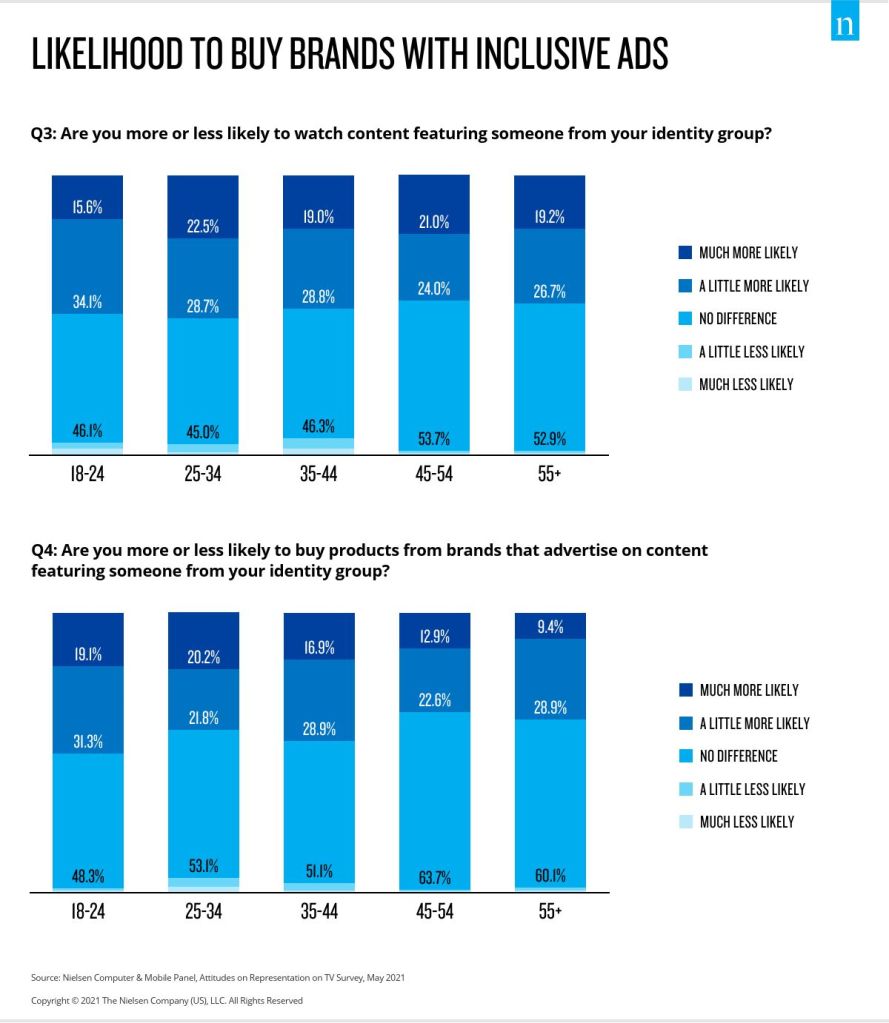
Next, build diversity into your business strategy. Brands must understand that intersectional diversity isn’t a special summer event, it’s our new normal. Not only is Generation Z the most racially and ethnically diverse generation in the U.S., one in six adults in the Gen Z age group identify as a lesbian, gay, bisexual or transgender. Nielsen data shows young people expect the media and brands they engage with to embrace a standard of representation and inclusion true to their lived experience. In Nielsen’s recent Attitudes on Representation on TV survey, half of the respondents aged 18-24 said they were more likely to watch content featuring someone from their identity group and more likely to purchase from brands that advertise in that inclusive content.
Traditional television content and ads aren’t the only place LGBTQ+ audiences are looking for authentic representation. Brands should also work to deepen digital connections—it’s where LGBTQ+ people have created lasting allies and a borderless sense of community. Streaming and sharing video content makes digital engagement a must for connecting your brand to LGBTQ+ consumers. LGBTQ+ usage of YouTube alone outpaces the general population by more than a third and these consumers are more likely to be heavy social media users—particularly for visually driven ad-supported platforms like Instagram. There are LGBTQ+ people in every community every day of the year, and your ad strategy should reflect that.